
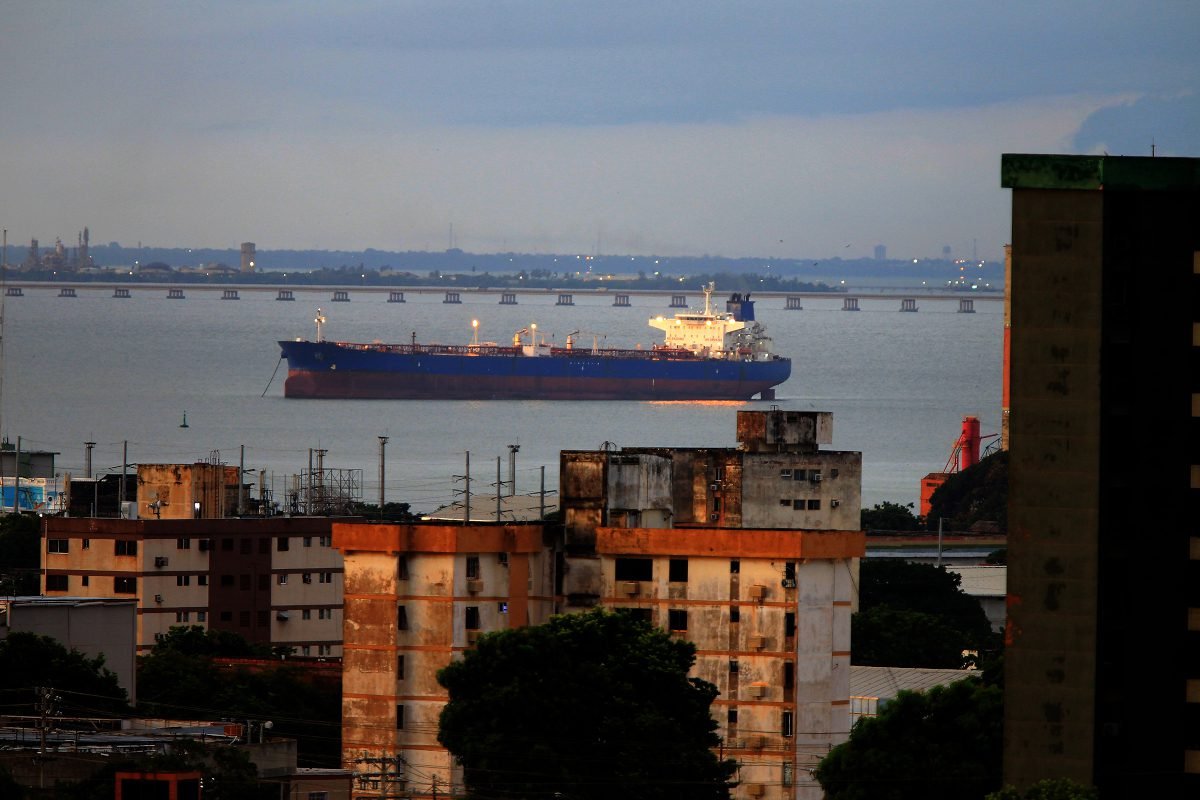
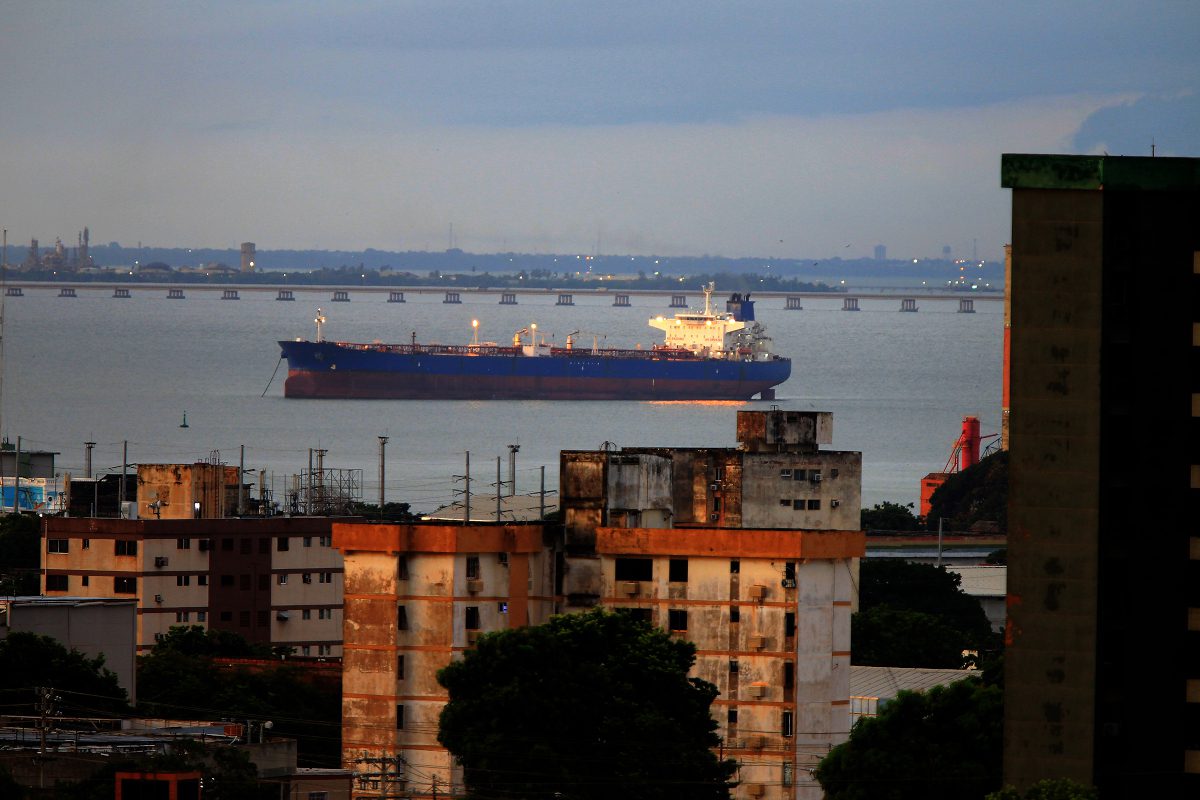
Donald Trump’s confidence that the Venezuelan oil industry can be revived by US companies understates a complex situation. The challenge extends beyond the severely dilapidated state of infrastructure to include profound institutional decay and political risk. Legal uncertainties also prevail, driven by sanctions, contested authority, and the unprecedented nature of any large-scale US re-engagement.
With the discovery of great wealth comes disaster: It’s a timeworn observation whose exemplars cram the history books of many regions of the world, particularly in the Global South. A decisive moment for Venezuela seems to have been the 2007 announcement that it was sitting on the largest oil reserves in the world. Widely reported at the time was a putative 300 billion barrels of recoverable resource, an even larger stockhold than Saudi Arabia, albeit a more expensive one to exploit given its heavier grade.1
Behind the country’s currently reported 17 per cent share of the world’s proven crude reserves2 is a much more caveat-heavy appraisal of the likely profitability (or advisability) of developing them. The majority of this material comprises what are considered heavy – or “sour” – grades of crude, which are the most difficult to pump, transport and refine, and carrying the highest penalty in terms of GHG emissions and required energy inputs.
A 2018 policy paper rated Venezuela’s oil as having the second-highest carbon intensity of any in the world (second to Algeria),3 while one 2024 ranking puts it in the number one position,4 according to a report in Inside Climate News.
The high sulphur content too – generally ranging from ~1% up to ~5% sulphur by weight,5 and far above “sweet” crude (<0.5%) – introduces complexities such as the greater propensity to corrode pipelines and tanks, and the requirement for more complex refining. It is also an unhappy fit with the far more stringent caps on sulphur dioxide emissions that have been introduced in sectors such as shipping in recent years.
Methane leaks and emissions further swell the bloated balance sheet of carbon emissions from the country’s oil industry, with Venezuela’s oil near the top of the charts of oil-producing countries for methane intensity.
Profiling the collapse
Leaks and fugitive emissions are an ongoing hazard arising from the dilapidated state of the industry’s infrastructure, which has a confluence of causes variously attributed to mismanagement and US sanctions. The industry was nationalised in 1976, and thereafter managed by the state-owned PDVSA, with limited input from foreign oil companies. Decisions made in the eary 2000s under former president Hugo Chavez further excluded foreign companies from participation, a factor that has a bearing on subsequent mismanagement, in the narrative offered by many commentators. The imposition of US sanctions in 2017 cut off the supply of foreign capital, and also meant that firms providing high-tech services to the industry were left unpaid, in the account provided by the FT.6
The upshot of years of under-investment is an industry by all accounts in a state of dysfunction, with crumbling, ageing infrastructure giving rise to a multitude of environmental and safety hazards. Pipelines have reportedly not been updated in over 50 years, according to PDVSA data from 2021, as reported by the FT.7
Accurate data appears to be a scarce commodity, but over 46,000 oil spills occurred between 2010 and 2016 in figures recorded by the state-owned oil company PDVS, while a labour union in the country suggested in 2020 that oil spills were an almost daily occurrence.8 Satellite analysis and the reports of environmental groups also confirm an ongoing situation of continuing oil spills.
Lake Maracaibo, Latin America’s largest lake, is one of the sites said to be badly affected by contamination from spills, with grave repercussions for fisheries, biodiversity, and local livelihoods.
Storage and processing facilities too appear to tell a story of neglect, with satellite imagery showing huge swathes of capacity offline.9 In some cases tanks appear to be suffering from corrosion and lack of maintenance, while in others sludge accumulation suggests a shortfall in plants’ operating capacities.
Production today stands at roughly a third of the industry’s 1970s peak of around 3.5 million barrels per day. One of the country’s biggest oilfields, Carabobo, which had been expected to produce around a third of the country’s oil in January 2026, has instead suffered a one-third fall in production.
Numerous factors appear to contribute to the current decline, not least of course being the ongoing US naval blockade. The industry’s decline of recent decades has also, among other things, led to an export of skills. Former BP head Lord Browne, speaking to the BBC, said the country “used to have a tremendous skill base”, whilst “today there’s clearly a lack of skills, lack of investment, lack of infrastructure”.
The ongoing economic collapse of the country has also given rise to widespread looting, including of infrastructure, in the FT’s analysis.
Electricity blackouts have been a further upshot of the infrastructure dilapidation, including a March 2019 blackout which left 26 people dead and the oil-producing region of Orinoco without power. The incident was at the time attributed by former president Maduro to a US cyberattack.
Ingredients of a reboot
Trump said: “We’re going to have our very large United States oil companies, the biggest anywhere in the world, go in, spend billions of dollars, fix the badly broken infrastructure, the oil infrastructure, and start making money for the country.” But what will be required to get things back on track? Even just maintaining Venezuelan oil production at existing levels would require a staggering $53 billion in energy infrastructure investment over the next 15 years, according to analysis produced by Nordic energy consultancy Rystad Energy.10 Getting back to a 3 million barrels per day level by 2040 would require a total oil and gas capex of $183 billion, said the group.
A comparable figure of $50–100 billion of sustained investment was offered as the price tag of “any real turnaround” in the view of Kirk Edwards, president of Latigo Petroleum,11 who suggested additional indispensable ingredients as modern infrastructure and years of political stability.
The scale of investment also presents a demanding requirement for legal assurances, as oil industry expert Elisabeth Eljuri explained to the FT, detailing the need for durable contracts, granted by legitimate authorities and consistent with the country’s constitution. Long-term commitments in the billions also peg international arbitration rights as a priority of investors in addition to international treaties between the Venezuelan government and the US.
Who will do it?
All of the above would seem to presage a cautious approach by big oil companies and investors, perhaps clearing the way for the smaller firms and “smart risk takers” as one reader comment in the FT put it. Investment group Elliott Capital is now the owner of US based refiner and fuel retailer Citgo, which had been wholly owned by PVDSA, Venezuela’s state-owned oil company, from 1990 until 2019. Citgo still owns refineries in the US equipped to handle and process the heavy oil produced by the country. It may be in a position to capitalize on the ongoing effort to reboot Venezuela’s production.
The lifting of the US blockade will also, obviously, guarantee a market for the oil thus produced.
In the day’s following the US invasion, former BP chairman Lord Browne suggested British oil and gas firms were probably already lobbying to participate in Trump’s planned reboot.12 “Having options for business in different parts of the world is a good thing to have,” he said.
Notes
[1] “Venezuela Oil”. Country Analysis Briefs. US Energy Information Administration. 2007;
[2] “The Catastrophic State of Venezuela’s Oil Facilities”, Financial Times, 7 January 2026; [3] Brandt, Gordon et al, Science, 2018; [4] RMI’s oil and gas climate index, 2024; [5] https://www.eia.gov/international/content/analysis/countries_long/Venezuela/background.htm?utm_source=chatgpt.com; [6] FT, 7 January 2026; [7] ibid; [8] “The Dirtiest, Worst Oil Is in Venezuela”, Inside Climate News, January 2026; [9] “The Catastrophic State of Venezuela’s Oil Facilities”, FT, 7 January 2026; [10] https://www.ajot.com/news/what-would-it-take-to-bring-venezuelas-oil-output-back-to-3-million-bpd-rystad-energy-special-market-upda; [11] Inside Climate News, January 2026; [12] ” UK oil companies likely to push for Venezuela involvement, Lord Browne says”, The Chemical Engineer, Jan 2026.