
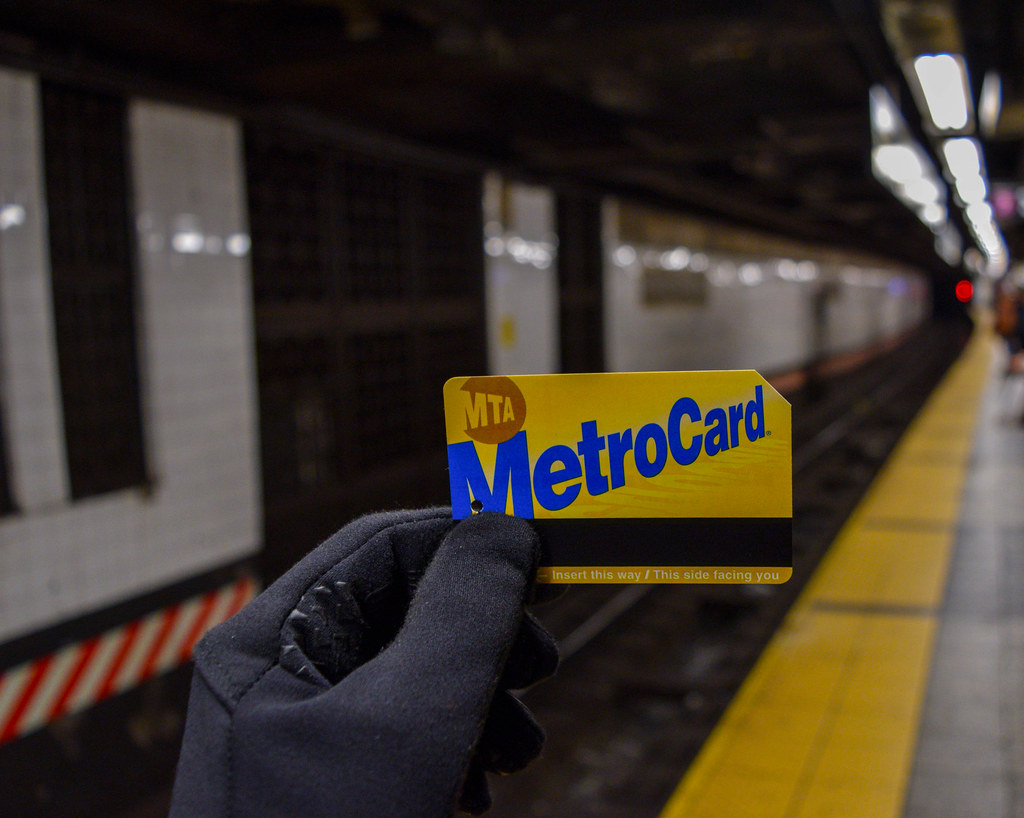
The retirement of the MetroCard as the ball dropped on New Year’s Eve was bittersweet for me.
In 1983, as a young lawyer, I took a year’s leave of absence from my law firm to serve as special counsel to Richard Ravitch, chairman of the MTA. He gave me the task of leading a study of modern fare collection systems that could replace the subway token, which had been in use since 1953, when the fare went to 15 cents. (The fare was five cents from 1904 to 1948, and was paid with a nickel; then ten cents, and paid with a dime or two nickels; but there is no 15 cent piece.) The token was functionally as well as physically inflexible – it denoted exactly one ride at exactly one price. In New York, tokens were like cash; they were used as restaurant tips. Tokens became so iconic that they showed up in necklaces and cufflinks.
The Transit Authority had to mint new tokens whenever the fare went up, except when they didn’t. The TA waited until the last minute to reveal if the next fare change would lead to a new token, so some people engaged in token arbitrage – they hoarded tokens in the hopes that they would remain in effect but instantly jump in value when the fare changed.
In search of a successor to the token, in 1983 my MTA colleague Steve Polan and I separately visited major cities in North and South America, Europe and Asia that had subways with electronic fare collection systems, rode their trains, and interviewed their managers. We found that the most technologically sophisticated systems used magnetic stripes printed on cards. We were worried that the cards and the devices that read them would be subject to abuse; with permission we poured Coca Cola onto the card readers to make sure they wouldn’t be ruined. (A rumor circulated that we also tested with urine, but that was false.)
The magnetic stripe was a revolutionary advance over the token. It could store the value of multiple trips and delete them as they were used; be refreshed in value at a token booth (as they were called) or vending machine; allow unlimited trips for a day, a week or a month; provide discounts to students and seniors; make free transfers easier; and allow fare increases without needing replacement cards. They were harder to counterfeit than tokens and didn’t require riders to carry metal in their pockets or purses. Advertisements could be printed on the back. Some cities adjusted their fares by time of day or required the cards to be inserted upon both entry and exit so that higher fares could be charged for longer trips, but New York City (whose land use patterns had formed based on a flat fare) chose not to do any of that.
So Steve and I recommended the adoption of fare cards with magnetic stripes. It took a decade for this to happen. The transit bureaucracy and unions had to be convinced. Consultants were hired to work out the details and test prototype cards. Turnstiles and bus fare boxes had been purely mechanical devices with no electronics; they had to be wired to read and subtract the value of the cards, and equipped with card readers in addition to token slots. (The token wasn’t fully retired until 2003.) The associated computer systems needed to be produced. They created a digital record of where and when each card was used. The Transit Authority had to set up a unit to respond to requests from law enforcement seeking to check whereabouts and alibis.
The convenience of the MetroCard may also have contributed to the significant increase in transit ridership that occurred after its introduction in 1994.
From its launch the MetroCard became as much a part of life in New York as the token had been since 1953. New technologies like the smart phone later emerged that weren’t envisioned in 1983 when we did our study, rendering the MetroCard obsolete, and it has now disappeared except as a relic of a day gone by. But it served the city well for a generation.