
The Trump administration’s decision to withdraw the US from the intergovernmental science panel for nature “harms everybody, including them”, according to its chair.
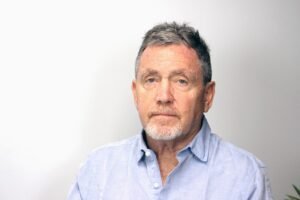
Dr David Obura is a leading coral reef ecologist from Kenya and chair of the Intergovernmental Science-Policy Platform on Biodiversity and Ecosystem Services (IPBES), the world’s authority on the science of nature decline.
In January, Donald Trump announced intentions to withdraw the US from IPBES, along with 65 other international organisations, including the UN climate science panel and its climate treaty.
In an interview with Carbon Brief, Obura says the warming that humans have already caused means “coral reefs are very likely at a tipping point” and that it is now inevitable that Earth “will lose what we have called coral reefs”.
A global goal to halt and reverse biodiversity loss by 2030 will not be possible to achieve for every ecosystem, he continues, noting that a lack of action from countries means “we won’t be able to do it fast enough at this point”.
Despite this, it is still possible to reverse the “enabling drivers” of biodiversity decline within the next four years, he adds, warning that leaders must act as “our economies and societies fully depend on nature”.
The interview was conducted at the sidelines of an IPBES meeting in Manchester, UK, where governments agreed to a new report detailing how the “undervaluing” of nature by businesses is fuelling biodiversity decline and putting the global economy at risk.
- On US leaving IPBES: “Any major country not being part of it harms everybody, including themselves.”
- On reversing nature loss by 2030: “We won’t be able to do it fast enough at this point.”
- On the value of biodiversity: “Nature is really the life support system for people. Our economies and societies fully depend on nature.”
- On coral reefs: “We will lose what we have called coral reefs up until this point.”
- On nature justice: “The places that are most vulnerable don’t have the income, or the assets, to conserve biodiversity.”
- On IPBES’s latest report: “One of the key findings is all businesses have impacts and dependencies on nature.”
- On the next UN nature summit: “We need acceleration of activities and impact and effectiveness, more than anything else.”
Carbon Brief: Last month Trump announced plans for the US to exit IPBES and dozens of other global organisations. You described this at the time as “deeply disappointing”. What are your thoughts on the decision now and what will be the main impacts of the US leaving IPBES?
David Obura: Well, part of the reason that I’ve come to IPBES is because, of course, I believe in the multilateral process, because we bring 150 countries together, we’re part of the UN and the multilateral system and we’re based on knowledge [that provides] inputs to policymaking. We have a conceptual framework that looks from the bottom up on how people depend on nature. I’m also doing a lot of science on Earth systems at the planetary level, how our footprint is exceeding the scale of the planet. We have to make decisions together. We need the multilateral system to work to help facilitate that. It has never been perfect. Of course, I come from a region [Kenya] that hasn’t been, you know, powerful in the multilateral process.
But we need countries to come together, so any major country not being part of it harms everybody, including themselves. It’s very important to try and keep pushing through with the knowledge and keep doing the work that we’re doing, so that, over time, hopefully [the US will] rejoin. Because, in the end, we will really need that to happen.
CB: This is the first IPBES meeting since Trump made the announcement. Has it had an impact so far on these proceedings and is there any kind of US presence here?
DO: This plenary is like every plenary that we have had. The current members are here. Some members are not. And, of course, we have some states here as observers working out if they’re going to join or not. And then we have a lot of private sector observers and universities and so on. The impact of a country leaving – the US in this case – has no impact on the plenary itself, because they’re not here making decisions on the things that we do.
We, of course, don’t have US government members attending in technical areas, but we do have institutions and universities and academics here attending as they have in the past. So, in that sense, the plenary goes on as it goes on – the science and the knowledge is the same. The decision-making processes we have here are the same. And, as I said earlier, what has an impact is the actual action that takes place afterwards, because a lot of the recommendations that we make are based on enabling conditions that governments put in place, to bring in place sustainability actions and so on. When governments are not doing that, especially major economic drivers, then the whole system suffers.
CB: When you were appointed as chair of IPBES more than two years ago, you said that your aim was to strengthen cohesion and impact and also get the findings of IPBES in front of more people. So how would you rate your progress on this now that it’s been about a couple of years?
DO: Well, like any intergovernmental process, we have a certain amount of inertia in what we do and it takes a few years to consult on topics for assessments and then to do them and to improve them and get them out.
One of the main things we’re discussing right now is we have had a rolling work programme from when IPBES started until 2030 and we need to decide on the last few deliverables and how we work in that period. We are asking for a mandate to spend the next year really considering the multiple options that we have in proposing a way forward for the last few years of this work programme. I feel that the countries are very aligned. We have done a lot of work, produced a lot of outputs. It is challenging for governments and other stakeholders to read our assessments and reach into them to find what’s useful to them. They make constant calls for more support, in uptake, in capacity building and in policy support.
The second global assessment in 2028 will be our 17th assessment [overall]. We would like to focus on really bringing all this knowledge together across assessments in ways that are relevant to different governments, different stakeholder groups, different networks to help them reach into the knowledge that’s in the assessments. And I think the governments, of course, want that as well, because many of them are calling for it. Many of the governments that support us financially, of course, want to see a return of investment on the money that they have put in.
CB: Nations agreed to halt and reverse biodiversity loss by 2030. Back in 2023 we had a conversation for Carbon Brief and you said that you were “highly doubtful” this goal could be achieved for every ecosystem by that date. Where do you stand on this now?
DO: I work on coral reefs and part of the reason I’ve come to IPBES platform is because the amount of climate change we’re committed to with current fossil fuel emissions and the focus on economic growth means that corals will continue to decline 20, 30, 40 years into the future. I think of that there’s no real doubt. The question is how soon we put in place the right actions to halt climate change. That will then have a lag on how long it takes for corals to cope with that amount of climate change.
We can’t halt and reverse the decline of every ecosystem. But we can try and bend the curve to halt and reverse the drivers of decline. So, that’s some of the economic drivers that we talk about in the nexus and transformative change assessment, the indirect drivers and the value shifts we need to have. What the Global Biodiversity Framework [GBF, a global nature agreement made in 2022] aspires to do in terms of halting and reversing biodiversity decline – we absolutely need to do that. We can do it and we can put in place the enabling conditions for that by 2030 for sure. But we won’t be able to do it fast enough at this point to halt [the loss of] all ecosystems.
We’re now in 2026, so this is three years plus after the GBF was adopted. We still need greater action from all countries and all stakeholders and businesses and so on. That’s what we’re really pushing for in our assessments.
CB: Biodiversity loss has historically been underappreciated by world leaders. As the world continues to be gripped by geopolitical uncertainty, conflict and financial pressures, what are your thoughts on the chances of leaders addressing the issue of biodiversity loss in a meaningful way?
DO: What are the chances of addressing biodiversity loss? I mean, we have to do it. It’s really our life support system and if we only focus on immediate crises and threats and don’t pay attention to the long-term threats and crises, that only creates more short-term crises down the line, we make it harder and harder to do that. I hope that what I’m hoping we get to understand better through IPBES science, as well as others, is that we’re not just reporting on the state of biodiversity because it’s nice to have it, but it’s [because] diversity of nature is really the life support system for people. Our economies and societies fully depend on nature. If we want them to prosper and be secure into the long-term future, we have to learn how to bring the impact and dependencies of business, which is a focus of this assessment, in line with nature. And until we do that, we will just continue to magnify the potential for future crises and their impacts.
CB: You mentioned already that your expertise is in coral reefs. A report last year warned that the world has reached its first climate tipping point, that of widespread dying of warm water coral reefs. Do you agree with that statement and can you discuss the wider state of coral reefs across the world at this present moment?
DO: The report that came out last year in 2025 was a global tipping point report and it’s actually in 2023 the first one of those [was published]. I was involved in that one and we basically took what the IPCC [Intergovernmental Panel on Climate Change] has produced, which [is] compiled from the [scientific] literature [which said] that 1.5-2C was the critical range for coral reefs, where you go from losing 70-90% to 90-99% of coral reefs around the world. [It is] a bit hard to say exactly what that means. What we did was we actually reduced that range from 1.5C-2C to 1-1.5C, based on observations we’ve already made about loss of corals. In 2024, the world was 1.5C above historical conditions for one year. The IPCC number requires a 20-year average [for 1.5C to be crossed]. So, we’re not quite at the IPCC limit, but we’re very close. Also, with not putting in place fast enough emission reductions, warming will continue.
Coral reefs are very likely at a tipping point. And, so, I do agree with the statement. It means that we lose the fully connected regional, global system that coral reefs have been in the past. There will still be some coral reefs in places that have some natural protection mechanisms, whether it’s oceanographic or some levels of sedimentation in green water from rivers can help. And there’s resilience of corals as well. Some corals will be able to adapt somewhat, but not all – and not all the other species too. We will lose what we have called coral reefs up until this point. We’ll still continue to have simpler coral ecosystems into the future, but they won’t be quite the same.
It is a crisis point and my hope is that, in coming out from the coral reef world, I can communicate that this is, this has been a crisis for coral reefs. It’s a very important ecosystem, but we don’t want it to happen to more and more and more ecosystems that support more [than] hundreds of millions and billions of people as well. Because, if we let things go that far, then, of course, we have much bigger crises on our hands.
CB: Something else you’ve spoken about before is around equity being one of the big challenges when it comes to responding to biodiversity loss. Can you explain why you think that biodiversity loss should be seen as a justice issue?
DO: Well, biodiversity loss is a justice issue because we are a part of biodiversity and – just like the loss of ecosystems and habitats and species – people live locally as well. People experience biodiversity loss in their surroundings.
The places that are most vulnerable and don’t have the income, or the assets, to either conserve biodiversity, or need to rely on it too much so they degrade it – they feel the impacts of that loss much more directly than those who do have more assets. Also, the more assets you have, the more you can import biodiversity products and benefits from somewhere else.
So, it’s very much a justice issue, both from local levels experiencing it directly, but then also at global levels. We are part of it [biodiversity], we don’t own it. It’s a global good, or a common public good, so we need to be preserving it for all people on the planet. In that sense, there are many, many justice issues that are involved in both loss of biodiversity and how you deal with that as well.
CB: How would you say IPBES is working towards achieving greater equity in biodiversity science?
DO: One of the headline findings of our values assessment in 2022, which looked at multiple values different cultures have and different worldviews around the planet, [was that] by accommodating or considering different worldviews and different perspectives, you achieve greater equity because you’re already considering other worldviews in making decisions.
So, that’s an important first step – just making it much more apparent and upfront that we can’t just make decisions, especially global ones, from a single worldview and the dominant one is the market economic worldview that we have. That’s very important.
But, then, also in how we do our assessments and the knowledge systems that are incorporated in them. We integrate different knowledge systems together and try and juxtapose – or if they can be integrated, we do that, sometimes you can’t – but you just need to illustrate different worldviews and perspectives on the common issue of biodiversity loss or livelihoods or something like that.
We hope that our conceptual framework and our values framework really help bring in this awareness of multiple cultures and multiple perspectives in the multilateral system.
CB: When this interview is published, IPBES will have released its report on business and biodiversity. What are some of the key takeaways from this?
DO: Our assessments integrate so much information that the key messages are actually, in retrospect, quite obvious in a way. One of the key findings it will say is that all businesses have impacts and dependencies on nature.
Of course, when you think about it, of course they do. We often think, “oh, well ecotourism is dependent on nature”, but even a supermarket is dependent on nature because a lot of the produce comes from a natural system somewhere, maybe in a greenhouse or enhanced by fertiliser, but it still comes from natural systems. Any other business will have either impacts on the nature around it, or it needs tree shade outside so people can walk in and things like that.
So, that’s one of the main findings. It’s not just certain sectors that need to respond to biodiversity loss and minimise their impacts. All sectors need to. Another finding, of course, is that it’s very differentiated depending on the type of business and type of sector.
It’s also very differentiated in different parts of the world in terms of responsibilities and also capabilities. So small businesses, of course, have much less leeway, perhaps, to change what they’re doing, whereas big businesses do and they have more assets, so they can deal with shifts and changes much better.
It’s a methodological assessment, rather than assessing the state of businesses, or the state of nature in relation to businesses [and] they pull together a huge list of methodologies and tools and things that businesses can access and do to understand their impacts and dependencies and act on them. Then [there is] also guidance and advice for governments on how to enable businesses to do that with the right incentives and regulations and so on. In that sense, it helps bring knowledge together into a single place.
It has been fantastic to see the parallel programme that the UK government has organised [at the IPBES meeting in Manchester]. It has brought together a huge range of British businesses and consultancies and so on that help businesses understand their impacts on nature. There’s a huge thirst.
To some extent, I would have thought, with so much capacity already in some of these organisations, what would they learn from our assessments? But they’re really hungry to see the integration. They really want to see that this really does make a big difference, that others will do the same, that the government will really support moving in these directions. There’s a huge amount of effort in the findings coming out and I’m sure that that will be felt all around the world and in different countries in different ways.
CB: As we’re speaking now, you’re still in the midst of figuring out exactly what the report will say and going through line-by-line to figure this out. Something we’ve seen at other negotiations…has been these entrenched views from countries on certain key issues. And one thing I did notice in the Earth Negotiations Bulletin discussion of yesterday’s [4 February] negotiations was that it said that some delegations wanted to remove mentions of climate change from the report. Has this been a key sticking point here or have there been any difficulties from countries during these negotiations?
DO: The nature of these multilateral negotiations is that the science is, in a way, a central body of work that is built through consensus of bringing all this knowledge together. It’s almost like a centralising process. And, yes, different countries have different perspectives on what their priorities are and the messages they want to see or not.
We still, of course, deal with different positions from countries. What we hope to do is to be able to convene it so that we see that we serve the countries best by having the most unbiased reporting of what the science is saying in language that is accessible to and useful to policymakers, rather than not having language or not having mention of things in in the agreed text.
How it’ll work out, I don’t know. Each time is different from the others. I think one of the key things that’s really important for us is that you do have different governance tracks on different aspects of the world we deal in. So, the [UN] Sustainable Development Goals, as well [as negotiations] on climate change – the UNFCCC, the climate convention, is the governing body for that. There’s two goals on nature – the Convention on Biological Diversity and other multilateral agreements are the institutions that govern that part.
We have come from a nature-based perspective, with nature’s contributions to a good quality of life for people…We start in the nature goals, but we actually have content that relates to all the other goals. We need to consider climate impacts on nature, or climate impacts on people that affect how they use nature. The nexus assessment was, in a way, a mini SDG report. It looked at six different Sustainable Development Goals.
We try and make sure that while on the institutional mechanisms, certain countries may try and want us to report within our mandate on nature, we do have findings that relate to climate change that relate to income and poverty and food production and health systems [and] that we need to report [outwardly] so that people are aware of those and they can use those in decision-making contexts.
That’s a difficult discussion and every time it comes out a little bit differently. But we hope we move the agenda further towards 2030 in the SDGs. We have an indivisible system that we need to report on.
CB: The next UN biodiversity summit COP17 is taking place later this year. What are the main outcomes you’re hoping to see at that summit?
DO: The main outcomes I would hope to see from the biodiversity summit is greater alignment across the countries. We really need to move forward on delivering on the GBF as part of the sustainable development agenda as well. So there will be a review of progress. We need acceleration of activities and impact and effectiveness, more than anything else.
That means, of course, addressing all of the targets in the GBF. Not equally, necessarily, but they all need progress to support one another in the whole. We work to provide the science inputs that can help deliver that through the CBD [Convention on Biological Diversity] mechanisms as well. We hope they use our assessments to the fullest and that we see good progress coming out.
CB: Great, thank you very much for your time.

The post IPBES chair Dr David Obura: Trump’s US exit from global nature panel ‘harms everybody’ appeared first on Carbon Brief.