
Something quiet is taking place in a section of the Columbia River Gorge, which features striking basalt cliffs, wind turbines whirling above the highway, and small towns that are half defiant and half asleep. Not loud enough to garner national attention. Not glamorous enough for a press release from Silicon Valley. However, real, in the sense that things that happen gradually to real people are typically real.
For years, the Mid-Columbia Economic Development District has worked to keep six counties in two states—Oregon and Washington—together. These counties share workforce issues, geographic location, and the specific type of economic anxiety that settles in rural communities when traditional industries decline and nothing quickly steps in to replace them. The number of timber mills decreased. The fishing sector shrank. And for a long time, the scenery appeared to be the region’s greatest economic asset.
The realization that advanced manufacturing and environmental workforce training aren’t conflicting priorities in a setting like this is what has changed, and it’s actually difficult to gauge how quickly this change is occurring. Even though they are dressed differently, they may have the same priorities. Over a hundred people participated in the seven-month process of creating the MCEDD’s Comprehensive Economic Development Strategy through 2027. This was an exceptionally large coalition that included chambers of commerce, tribal governments, focus groups from the Latino and Hispanic communities, and state and federal partners. Inclusion of that kind doesn’t always yield positive outcomes. Sometimes it just generates lengthy documents. However, something seems to have taken hold here.
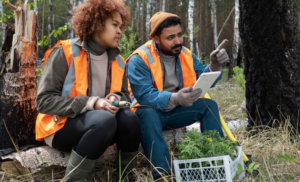
The factory floor of 1975 is not the same as advanced manufacturing in the twenty-first century. The work is technically challenging, capital-intensive, and directly related to research and development in ways that weren’t possible a generation ago. You will eventually lose the innovation if you lose the manufacturing capacity. The Columbia Gorge region appears to comprehend this unsettling logic better than some of its more well-known peers. In a landscape already defined by wind energy corridors and a national scenic area that requires careful management, environmental workforce training—which teaches employees how to operate and maintain clean energy infrastructure, emissions reduction equipment, and sustainable production systems—sits naturally.
However, the challenges are unyielding. Workforce participation is still hampered by childcare gaps, especially for women. In rural areas, where a high-speed connection is still something you hope for rather than expect, broadband access is still uneven. The very workers that manufacturing facilities need to attract are priced out by housing costs, which are exacerbated in part by being close to Portland’s sphere of influence. Women and workers of color in this area were disproportionately affected by the COVID-19 recovery, a pattern that the CEDS openly recognizes rather than subtly ignores.
It’s possible that recognizing inequality in a planning document won’t make it go away on the ground. It is reasonable to be skeptical. However, the specificity of the issues listed here—improved transportation networks, accessible childcare, and affordable housing—indicates that planners are addressing tangible reality rather than acting with concern.
Slowly and quietly, the Columbia Gorge may be creating a model—manufacturing growth directly linked to environmental responsibility, driven by a workforce trained to understand both—that larger, louder regions talk about but seldom actually implement. This place was largely forgotten by the rest of America. It might have been able to figure something out because of that.