Climate Solutions // ISSUE # 106 // HOTHOUSE

Hello dear readers,
It’s been a moment. I have sat down to draft a note to you a half dozen times over the last five months, but I struggled to find the words.
Truth be told, I’m still looking for them.
What I can say for now is that the hiatus was a form of wintering, not an abandonment of the work. If anything, over the course of the last year, I have sunk even deeper into the work.
The more time that lapsed, though, the greater the pressure to write something that justified the long silence. But that’s not really the nature of things, is it? Winter doesn’t come to an end because it’s lived up to one expectation or another. That’s not how seasons work. Winter ends because spring arrives. And when spring comes, the task is to simply begin again.
Which is why I’m grateful to writer Angely Mercado for nudging my hand. She was awarded fellowships by The Uproot Project and the EEJI Summer Institute Journalism Fellowship with Wake Forest University to report on food sovereignty in the Caribbean for Hothouse last year.
Food connects us to place, history, and one another. Finding our collective way forward, building regional food sovereignty place by place, might entail revisiting the structural and cultural forces that shaped the diets we’ve adapted to, so that we might reimagine the kind of menus that serve both our taste buds and our communities. Food is a reminder that culture can be made, unmade, and remade again to reflect the values of our choosing, from the labor we choose to grant prestige to the recipes we reach for.
The following is Angely’s work.
It looks like it’s already spring.
More soon,
Cadence
Editor-in-Chief

Planting seeds in Puerto Rico 🌱
Angely Mercado is a writer and fact checker based in NYC with bylines in Teen Vogue, Nonprofit Quarterly, The Body, Hothouse, and more. She has roots in the Caribbean via her family in both Puerto Rico and the Dominican Republic. This article is dedicated to the memory of her uncle, Francisco “Tuto” Mercado David who passed May 2026. He was one of the first people to ever lecture her on the importance of farming, and rain.
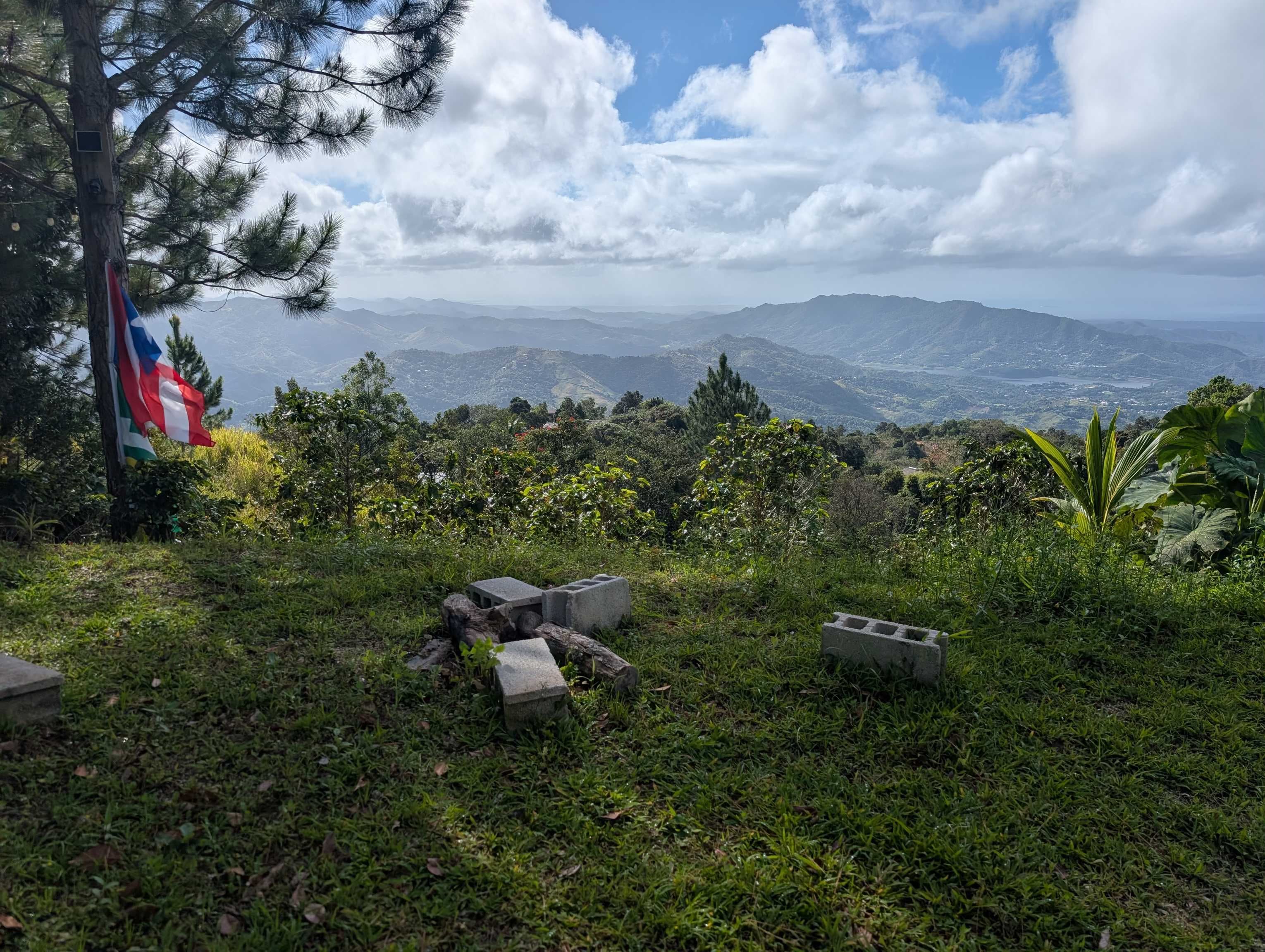
It’s early March. Driving up to Maritza del Rosario López Cortés’ coffee fields in Villalba feels like travelling into the sky. We’re in the central region of Puerto Rico, surrounded by what feels like endless waves of mountains that only go higher and higher. The car groans and sputters, so my dad and I park and attempt to walk the remainder of the way. At around a half mile above sea level, it’s somewhat cool and windy. Ideal conditions for growing coffee.
López Cortés finds us slightly winded on the side of the road in her pickup truck.We make the rest of the way together. “Glad I found you two,” she laughs while driving. “It’s still steep walking up.” She wasn’t wrong.
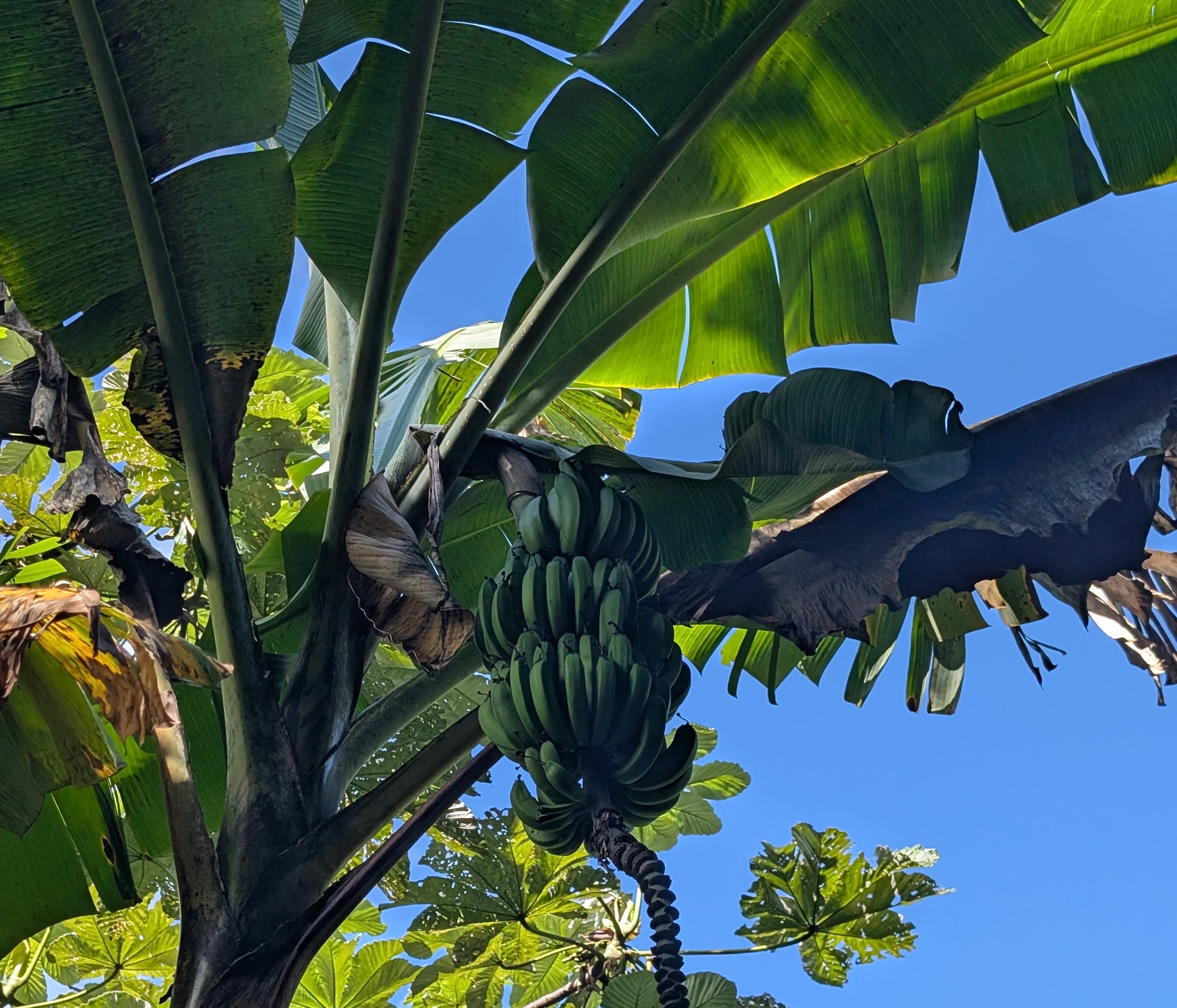
There’s a small shed with a bathroom and a green flag on a nearby tree representing the municipality. In the distance, the rolling hills around us felt like an endless emerald sea. She usually harvests the coffee beans around December. Year-round, she also grows a variety of starchy vegetables, like plantains, and herbs for making sofrito—a Caribbean mirepoix of sorts, made up of culantro, or cilantro, and lots of peppers, onion, and garlic. It’s used to season food for cooking on the archipelago. López Cortés beams with pride as she points to the plantain bunches on trees that grow alongside the bumpy red clay road that circles the property.
“Sometimes I don’t have to buy certain produce from the supermarket as often,” she says in Spanish. “I get to take platanos home with me, and everyone at home gets to eat from that one tree.”
López Cortés is one of many smaller farmers popping up in a U.S. territory where as much as 80 percent of the food consumed comes from the outside. She sells the coffee to relatives who roast and package it in Puerto Rico. The archipelago is seeing a burgeoning local farming resurgence. Small growers and community organizers are pushing for local food to reclaim land, their identity, and sense of security.
Relying on outside food also makes Puerto Rico vulnerable to supply chain shocks that come with the kinds of extreme weather events intensified by the climate crisis. Whenever docks are damaged by storms, or ships delayed, communities wait longer for food shipments. Hurricane Maria in 2017, for instance, famously pummeled the region with wind speeds of more than 150 miles per hour. Residents throughout Puerto Rico waited and saw food supplies dwindling at the time. Major supermarkets had to throw away perishable items. Longstanding power outages meant items like meat spoiled and were disposed of by major retailers like Walmart, Politico reported in 2018.
Luis Alexis Rodríguez-Cruz, a food systems researcher and writer based in Puerto Rico, says interest is growing in food sovereignty among organizers, growers, and others.
“I see food sovereignty as having agency over our food systems,” Rodríguez-Cruz explained. “And you’re hearing that phrase in more food and organizing spaces these last few years. It’s making people reclaim traditional recipes and it’s making people care about local agriculture.”
He feels that because so many people have had to experience food waste from constant outages following Hurricanes Irma and Maria, residents have seen the repercussions of having so many necessary goods be imported.
“[Maria’s] like this ‘aunt’ that never goes away,” he said jokingly. “But it taught us a lot.”
How an island made up of hills of emerald green stops growing its own food
There’s a long history as to why Puerto Rico moved away from growing much of its own food. The Taínos, the people indigenous to Puerto Rico, once cultivated the archipelago’s vibrant mountainsides for starchy root vegetables, known as viandas, legumes, and culinary herbs. Colonialism and plantations saw the displacement of the cultivation of these subsistence crops for cash crops intended for exportation. The green mountainsides were repurposed for sugarcane, coffee, and tobacco. In July of 1898, U.S. troops invaded during the Spanish-American war, taking over a territory that had been under Spain’s rule since the days of Christopher Columbus and Juan Ponce de León.
For much of the first half of the 20th century, major companies produced sugar throughout the archipelago, but production declined as production became cheaper elsewhere. In the 1980s, Puerto Rico still produced a little over 40 percent of its food. Despite being warm most of the year and having varied climates and rich soil composition, Puerto Rico has succumbed to the fate of many islands today—producing very little of its own food and importing the rest.
Colonialism and, later, industrialization worked in tandem to dismantle local food production as well as shape the archipelago’s taste toward more processed food.
During the Transatlantic slave trade, Spanish and British ships arriving in Puerto Rico’s harbors to pick up sugarcane molasses to distill into rum in New England arrived with merchandise of their own—often salted and tinned Cod fish. Despite Puerto Rico’s oceans teeming with fish, Cod would become a new staple of the Puerto Rican diet, a cheap protein that kept well under the tropical sun to feed the island’s enslaved populations and the growing settlements in the Caribbean. It’s now a regional staple. I eat massive amounts of it with viandas during Lent, and I have often shared massive bacalaitos (flour and bacalao fritters) with my siblings at the many patron saint festivals, street fairs, and sporting events we’ve attended in the Caribbean over the years.
Later, as Puerto Rico made the transition from an agricultural economy to one run on industry and tourism, cultural habits around food shifted further. Operation Bootstrap, a government effort to industrialize the island in the 1950s, moved a sizable portion of the population from the countryside to the cities to work in new factories. Under industrialism’s pressures for convenience, Puerto Ricans increasingly reached for imported processed food made of cereal grains and adopted a diet increasingly composed of meat.
Where 45 percent of Puerto Ricans cultivated the land as recently as 1945, by 2019 fewer than 2 percent did. These figures closely mirror the wider trend of agricultural vocation; in 1900, farmers made up 40 percent of the American labor force. Today that figure has dwindled to less than 2 percent.
Rebuilding a labor force is a thing of its own. Many young professionals have left Puerto Rico for better financial opportunities. According to data from the Pew Research Center, the archipelago’s population declined by about 17 percent after peaking at 3.8 million people in 2004.
Then there are the rules that govern how food enters the archipelago. The Merchant Marine Act of 1920, otherwise known as the Jones Act, requires that any goods shipped between U.S. ports, Puerto Rico included, must be transported by U.S.-owned and operated vessels. This is more expensive than shipping from another country, where shipping and labor costs may be lower than in the U.S. As a result, consumer prices are raised.
This has made food even more expensive in a place where residents already struggle with rapidly rising rental prices and displacement by wealthy newcomers and Airbnb listings. Puerto Rico also has a high sales tax of 11.5 percent, which increases the burden of shopping for families in a territory where the median household income in Puerto Rico was about $26,200 in 2024, compared to about $80,000 in the U.S. according to Census data.
Where Puerto Rico’s table goes from here
Proponents across the Caribbean increasingly see small-scale, sustainable farming as an answer to the kind of dependency ingrained by centuries of colonialism, industrialization, and trade regulations. Sometimes referred to as agroecology, it’s a lower impact kind of agriculture, where practitioners consider themselves stewards of the land—mindful of water consumption, waste reduction, and abstaining from pesticides, practices that minimize impact and simultaneously leverage the natural landscape.
And though farmers like López Cortés wouldn’t frame their work using vocabulary like ‘food sovereignty’ or agroecology,’ she has seen firsthand the power of having access to locally grown produce, as well as the space to grow her own. Aside from tending her own crops, López Cortés is a hairstylist. Past shipment delays to Puerto Rico have limited clients who wanted to dye their hair specific tones because she couldn’t get ahold of the right products. This, alongside disruptions from storms, was one of several ‘ah-ha’ moments for López Cortés.
“It made me realize that too many things come from outside,” she said. “If there’s a holdup or a problem, everything is impacted and we just have to wait around.”
In the event of climate-related future supply chain disruptions, where food can’t reach the archipelago, Cynthia Burgos López, the executive director of La Maraña, a San Juan-based nonprofit that focused on Puerto Rico’s sustainable development, explains local food will be all that’s available in those moments of duress.
“It’s really important to support local food production, because when we have a disaster, the first points that are impacted are the coast, and everything gets in through the coast,” she said. “By producing food locally, you’re part of the whole cycle.”
Other advocates see small farms as a way to address the persistent food insecurity across the Caribbean as well as protect biodiversity and cultural legacy—all issues amplified by climate-related weather trends, like more intense and more frequent hurricanes or droughts.
Some burgeoning support systems, and just as many challenges
Angel Mercado was one of the small farmers that I interviewed to get a sense of how challenging this work is. He lives in the Santa Ana area of Coamo, and is semi-retired after years of working in factories in New Jersey. I found out on my way to his home that he’s one of my many extended family members. My father grew up in Santa Ana in a large family and spent much of his childhood helping raise chickens and growing food. Several of my aunts and uncles still live in that area. I once told an uncle that I was bored, he handed me a bag of gandules to shell by hand and I never complained again.
He farms as a hobby and calls himself an ‘agricultor frustra’o’, a frustrated farmer.
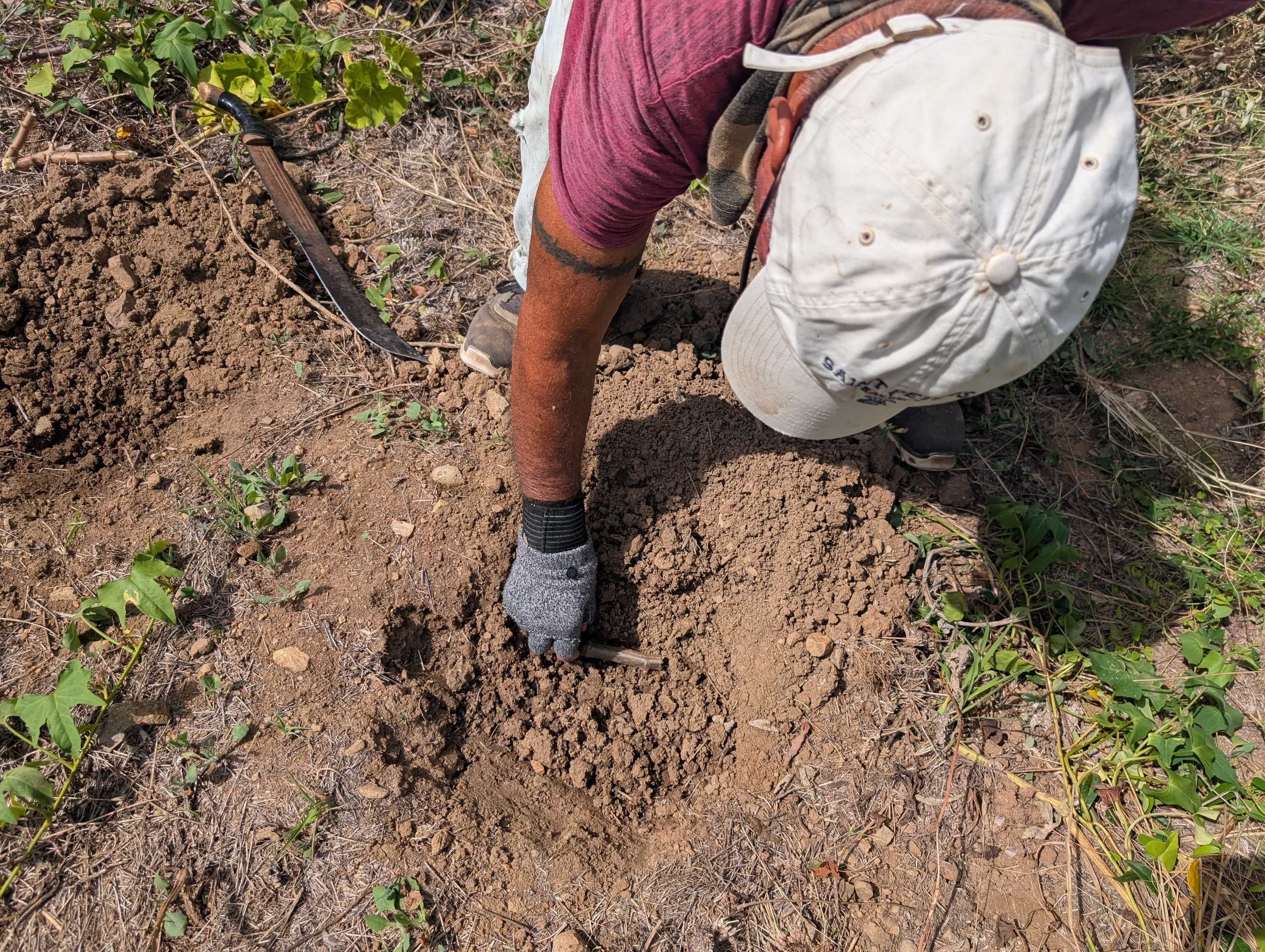
The many fruit trees, and vegetables, and potted plants with cilantro and onions feed Mercado and his wife. He sometimes sells the root vegetables and legumes he grows to people he knows or to smaller markets, and sometimes he gives them away. They also raise chickens for eggs. He picked and shared several guavas and sent me home with a few fragrant leaves for tea as we walked around his property. You can see hills, and beyond that, the blue stripe of the Caribbean Sea.
“You see that big tree over there,” he said, pointing at the other side of his field. “I planted that when I was a teenager.”
When Hurricane Maria barreled through, he lost everything. Mercado pointed to a field of grass and told me that he once had a lot of yucca and gandules—pigeon peas—growing there. An old photo on his wife’s cellphone shows neat rows of plants growing in the sun. I asked if he knew of any government subsidies or support for his work.
“That’s for people who have an official business,” he told me as he organized yucca roots that he planned to sow for a future harvest. “But I lost all of that crop and I was supposed to sell it. I had a few buyers already. But it was all gone, there was nothing left.”
There are organizers who are trying to fill in the gap. One group that has focused on making it easier for people to grow their own crops is El Departamento de la Comida (the department of food), a support hub in Caguas, Puerto Rico.
El DEPA was first founded in 2010. At that time organizers connected with local farms to sell and distribute to customers every week. A couple of years after its founding, organizers launched a restaurant and kitchen that sold produce, cooked meals, and housed local events like urban gardening workshops and music shows.
The nonprofit has since expanded its programming to include classes that bring in collaborators and teach others about composting useful crafts. Some of their local events include cooking classes and support. The goal is to empower community members to learn about growing their own food and to feel pride in cultivating the land. The events and workshops also serve as support for anyone who is curious about growing their own food locally, but don’t often know where to start.
I travelled up to Caguas from my family’s hometown in Coamo during one of my trips back to Puerto Rico. The route is winding road after winding road and there’s no cellphone service in the area. Organizer Carolina Otero Correa showed me around the location. Walking into the community center, I find a library of gardening books, information pamphlets for local farmers, and a wall with rows of farming tools, like shovels and rubber boots of various sizes, that community members can rent out. Out back are potted plants, food storage, and an area for hosting community events.
“We always invite people to come and check out our tools,” Otero Correa told me as we walked through. “We do this on an honor system.”
El DEPA buys products from local growers and sells the products they make at their small store that runs out of the community center. There’s a kitchen in the back with large refrigerators and a dehydrator. Options for sale that day included mango fruit leather neatly rolled and packaged, sachets of chili flakes, and a package of turmeric powder for around $5. While I was touring the space, a community member stopped by with her niece to say hello. I noticed her fingertips were stained turmeric yellow.
Other organizations take a different approach in their mission to support local farmers and fisheries. Burgos López at La Maraña explained that the organization distributes funding and finds local farmers in need by word of mouth. The organization created a food sovereignty fund and distributed thousands of dollars to support local growers after damage from Hurricane Fiona in 2022.
“We have this network of people that are part of our program, and we call them after disasters and ask ‘Is everything ok, do you need something?’” she said. “They’re dealing with a lot of risks—there’s flooding, wind if it’s in the coastal areas. But, if it’s inland, they’re more prone to landslides.”
Burgos López credits La Maraña’s efficacy in serving rural farmers, urban growers, and fisheries to thinking holistically and their constant effort to expand their network. Their work and monetary contributions help fill in a gap, she explained, where local food producers had different needs and were sometimes left out of the conversation.
“The Department of Agriculture will focus on large scale production, so these fishing villages or small agroecological farmers were not being supported, so we decided to focus on this,” she said.
But support groups and nonprofits are facing an added layer of challenges—funding opportunities are harder to come by as the federal government continues to fire federal employees and defund programs.
El DEPA had been one of many organizations that had applied for agricultural grants that were made available to nonprofits under the Biden administration. According to Otero Correa, El DEPA had received funding from the U.S. Environmental Protection Agency that would have supported operations for a handful of years. That funding was cancelled by the Trump Administration in 2025 alongside hundreds of other grants.
“[We think] this happened not just because we’re openly environmentalists, but we’re also really vocal about community inclusion,” Otero Correa said in Spanish as she showed me El DEPA’s garden space.
Otero Correa confirmed that El DEPA does receive non-government funding for their work. The organization’s website mentions donation options for individuals. But it was a blow to see the federal government cancel anticipated funding that would have supported more local growers and collaborators in and around Caguas.
“We invested a lot of our resources in making sure we were in compliance so that we could receive the funding,” she said. “And then it was cut.”
While non-profits and small farmers struggle to navigate bureaucratic paperwork to access funding for their endeavors, larger corporations in Puerto Rico, like Bayer, formerly Monsanto, enjoy the same benefits as an individual farmer. The corporate entity is entitled to 90 percent tax exemption and free water, not to mention nearly $3 million in wage subsidies to sweeten the deal.
Officials and government agencies often leave some small growers behind. For example, following Hurricane Maria, Puerto Rico’s former Secretary of Agriculture, Carlos Flores Ortega, promoted state-led solutions. One initiative touted increasing the accessibility of fresh cut fruits and vegetables at grocery stores, to help make healthy options as convenient as processed ones. Another pushed for increasing corporate agriculture on the island in the hopes of doubling agricultural production. These proposals have been met with some resistance, though, with critics arguing corporate agriculture defeats the purpose of food sovereignty, and feel that it benefits big businesses more than it supports local communities.
López Cortés managed to receive government funding and loans a few years ago to buy more equipment to support her work, but it was a process that involved documenting everything and signing paperwork with a lawyer. Though the process was tedious, the support was a welcome change. She and her family members no longer had to manually haul the coffee beans and other crops on a wagon. Before getting ahold of better equipment, cultivating the coffee beans and other crops took more manual labor.
“We even crawled and dragged stuff from the plants in order to reach the road,” she laughed. “We did it however we could do it honestly.”
This makes direct grants and funding from groups like El DEPA and La Maraña so much more important for providing everything from money to equipment for smaller farmers and newer food production businesses—especially for a U.S. territory where trade and shipping regulations make farming equipment more expensive to import.
Other U.S. territories have also invested in educating residents about their right to local food and finding pride in traditional ingredients. Like Puerto Rico, the U.S. Virgin Islands import most of their food despite being warm most of the year.
I connected with Olivia Walton, an environmental educator on St. Croix, who has worked to help students feel connected to their surrounding environment by learning about local food in the Caribbean. For several years she ran a summer program with the St Croix Environmental Association, a nonprofit that focuses on climate and conservation education. Her approach includes helping students think critically about why so much of the food they like is canned, or from chain restaurants like McDonalds, as opposed to local fish or staple starches like breadfruit. She also helps her students connect local food to extreme weather events they and their families have experienced.
Learning about local food systems has encouraged some of Walton’s previous students to become curious about their own family’s history. After one of the summer programming’s activities centered on local fish, she witnessed two siblings express an interest in their father’s work in a way she hadn’t seen expressed prior.
“One of the sisters was just so fascinated, and actually was now more interested in marine biology, and wanted to go out with her father when he goes fishing. And to me, that was really cool to see that, like, immediate interest in a topic,” Walton said.
Shaping taste
The move away from locally grown produce has shaped the food culture for several generations of people living in the Caribbean. During a trip to the Caribbean last year, I asked my cousin’s elementary-school-aged son what his favorite Puerto Rican food was. His response? He loves empanadas de pizza. And, to be fair, these empanadas are everywhere and are a cheap and delicious handheld food. But they’re less of a traditional fritura and more of a great symbol of how local diets have changed and folded in other ingredients and imported influence over time. Burgos López says she’s had a similar experience going to schools and speaking with children there.
“You will ask them ‘What is your favorite food?’ They will tell you ‘grapes’ or ‘a strawberry’,” she recounted. “For me, I’m like, ‘What happened? How did we get here?’”
I’ve timed trips to visit family and to report there during certain fruit seasons. I’ve picked tamarind on trees growing alongside a bridge in my family’s hometown. Neighbors have given me mangoes from their trees. I’ve sent long texts to friends lamenting that I visited too early for passion fruit season and only found a single ripe fruit. There’s a wealth of tropical fruits sometimes hard for me to find in New York City. I’ve spent months dreaming of sun-ripened quenepas from the trees I grew up climbing. Those summer break months spent shelling gandules, helping pick panapén and fruit were in part the seeds of my own curiosity about food systems.
And the growing local food movement isn’t necessarily a rejection of the fusion foods that are now staples in the Caribbean. Burgos López says that a local food movement could spotlight ingredients that are from this region of the world.
“For me, the best fish that you can find on this island is on the West Coast. [It’s a] tuna, and they don’t serve it enough in restaurants here, but it’s so amazing,” she said. “The ocean here is full of fish.”
Rodríguez-Cruz’s own relationship to food has changed over time too as he’s learned more about food sovereignty. Some of the traditional meals like viandas were something that Rodríguez-Cruz had always thought of as food that older relatives turned to. But he thinks the growing local food movement has pushed people to reclaim some of those dishes.
There are signs pointing to an awareness and appreciation for locally produced items. While shopping at a Walmart in Santa Isabel, I saw a small produce section with papaya and pineapples and a sign that read “apoya a la industria local”, support local industry. Nearby a shrink wrapped piece of squash showcased a label that read “hecho en Puerto Rico,” made in Puerto Rico. The rest of the produce wasn’t labelled like this.
For some small farm owners, they feel a sense of joy and pride that they can make it work as a food producer. One of these such enterprises is Daisy Santiago’s Farm in Coamo, not far from where many of my family members live. The owner, Feliciano Santiago Mateo (Danito), beamed when he explained the business name.
“Daisy is my wife,” he said in Spanish, laughing.
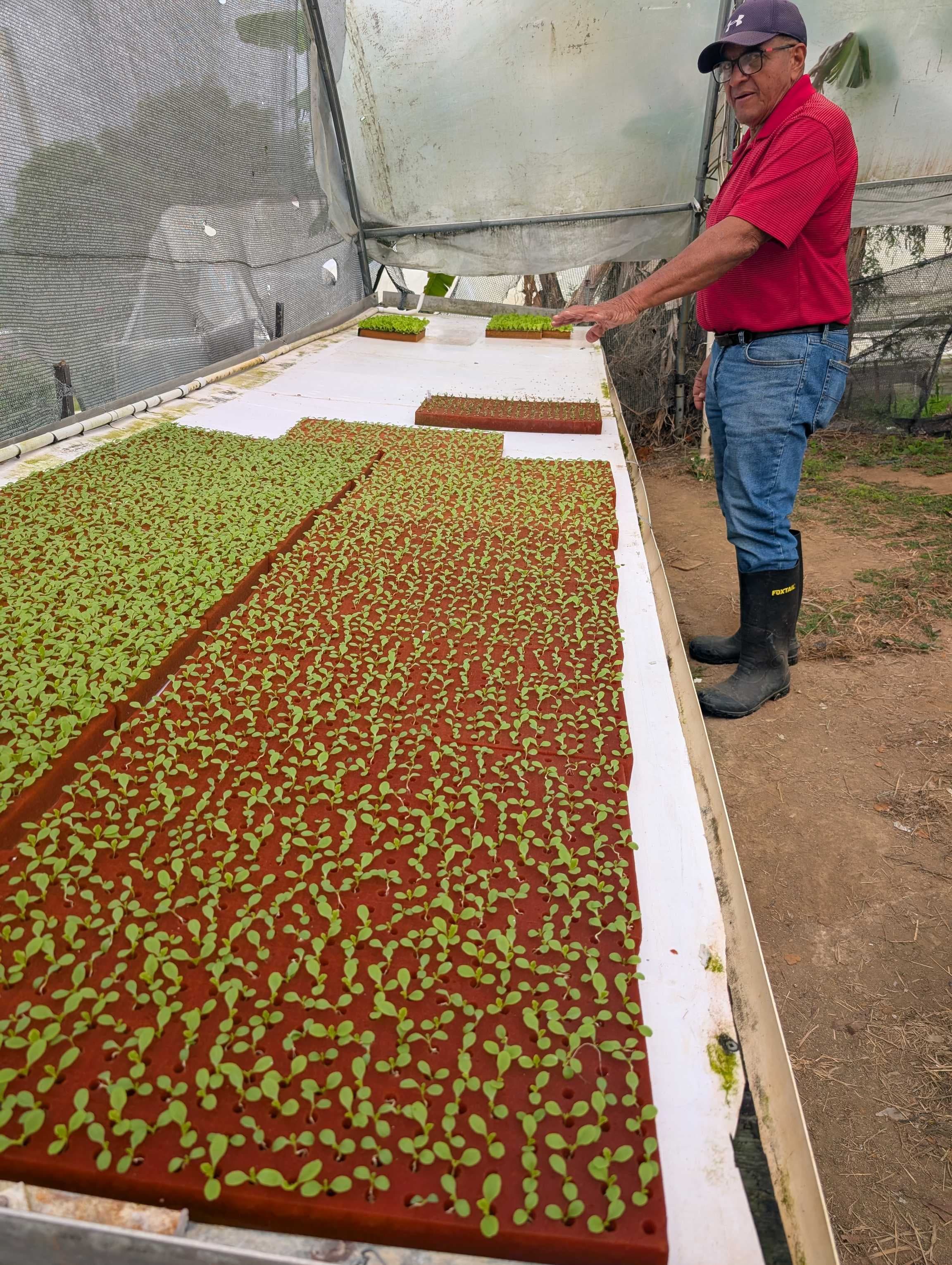
Mateo has a hydroponic farm that grows greens that he sells to small markets, bakeries, and restaurants in Puerto Rico. I spent a morning watching him and his employees work earlier this year. Operations are carried out in a small house with tools for germinating seeds before they’re transferred to the hydroponic stations. Next to the small house are several tents with rows of tubes with cutouts to hold the growing plants. The business is working on expanding its merchandise.
“We mainly grow cilantro and lettuce and now we’re working on growing peppers and other herbs like rosemary and spices, too,” he said as he walked me around the tents.
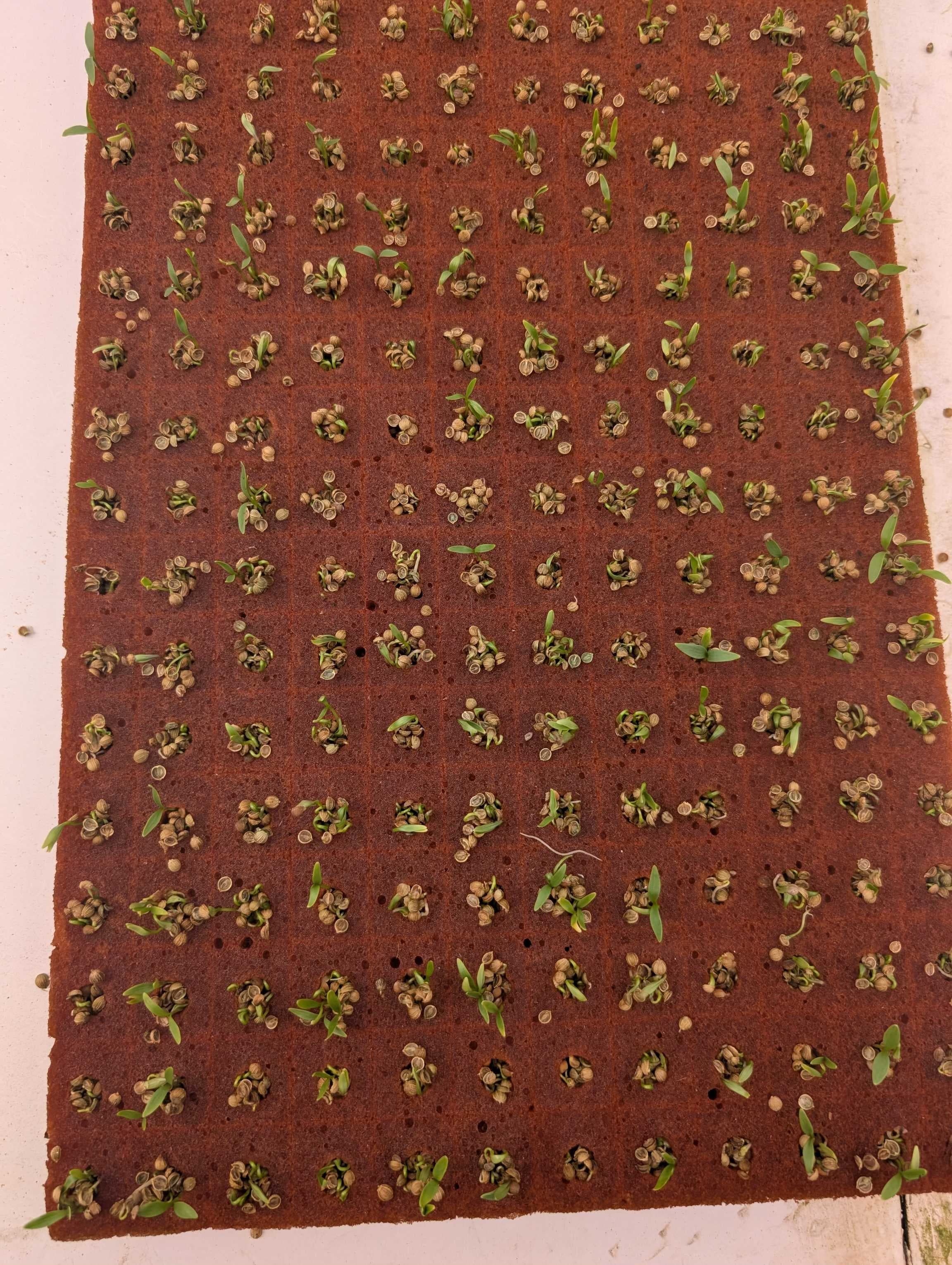
When he started working on this business, it was just him and his wife. He has since seen operations grow enough to take on a few workers. Mateo proudly showed me his water tank filled with tilapia and the small pepper plants lined up in a corner of a tent.
Mateo was excited when I shared that I had been interviewing others passionate about local produce. He recalled growing up in Coamo, where so many families around him produced some food of their own.
“When I eat anything that’s grown here [in Puerto Rico], I’m also helping people that are from here,” he said. “It’s fresher, and I’m helping my country’s economy. And that’s worth it to me.”
Reporting for this story was supported by The Uproot Project & the Wake Forest University fellowships.
Hothouse is a climate action newsletter edited by Cadence Bambenek. Enjoy what you’re reading? Click here and subscribe.
Thank you to the readers, paying subscribers, and partners who believe in our mission. We couldn’t do this work without you.