
A water-quality monitoring programme involving Kingston University will combine chemical analysis, environmental sampling and predictive modelling to assess pollution risks along the River Thames, supported by £110,000 in funding from local authorities, environmental organisations and the Port of London Authority.
The research will examine contaminants including heavy metals, pesticides, pharmaceuticals, microplastics, pathogens and illicit drugs, alongside assessments of the river’s ecology. Some measurements will be undertaken in real time, with the resulting data contributing to a publicly accessible forecasting model intended to help identify pollution risks along the river.
The programme forms part of the Mayors for a Drinkable Thames initiative, a network of local authorities, elected representatives and other stakeholders working towards the long-term ambition of improving the river’s water quality to the point where it could be considered drinkable.
Funding includes £45,000 secured by the Royal Borough of Kingston upon Thames, the London Borough of Richmond upon Thames and environmental campaign group Surfers Against Sewage to monitor the Windsor–Kingston–Richmond corridor. A further £65,000 has been provided by the Port of London Authority for monitoring downstream of Teddington Lock.
The funding will support a three-year PhD studentship, consultancy work and the acquisition of monitoring equipment.
Researchers from Kingston University’s School of Life Sciences, Pharmacy and Chemistry will investigate chemical and biological contamination, combining analytical measurements with pollution modelling to improve understanding of water-quality conditions and how they change.
The proposed forecasting system is intended to make information about pollution risks more accessible to the public, potentially helping river users and local authorities make better-informed decisions about recreational activities and the management of riverside amenities.
Professor James Barker, Professor of Analytical Science at Kingston University, said: “Our ambition is to turn scientific evidence into practical action to protect the River Thames. By combining advanced chemical analysis, environmental monitoring and predictive modelling, we aim to identify pollution risks earlier, improve public access to reliable water-quality information and help make the Thames safer for people and wildlife.”
He added that achieving a drinkable Thames remained a long-term vision, with the research representing one step towards that goal.
The programme comes amid growing scrutiny of water pollution and the adequacy of existing monitoring arrangements. The Independent Water Commission’s recent review of the sector recommended stronger regulatory oversight of pollution reporting and greater use of advanced monitoring technologies, alongside increased attention to contaminants such as microplastics and persistent chemicals.
The Thames initiative draws inspiration from Mayors for a Drinkable Meuse, a European collaboration involving stakeholders in France, Belgium and the Netherlands.
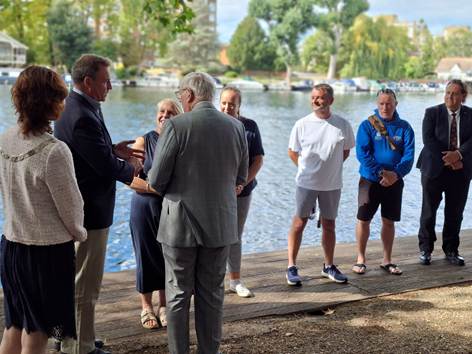
The work was recently highlighted during a visit by the Duke of Gloucester to Canbury Gardens in Kingston, where a separate riverside improvement project was officially opened.