
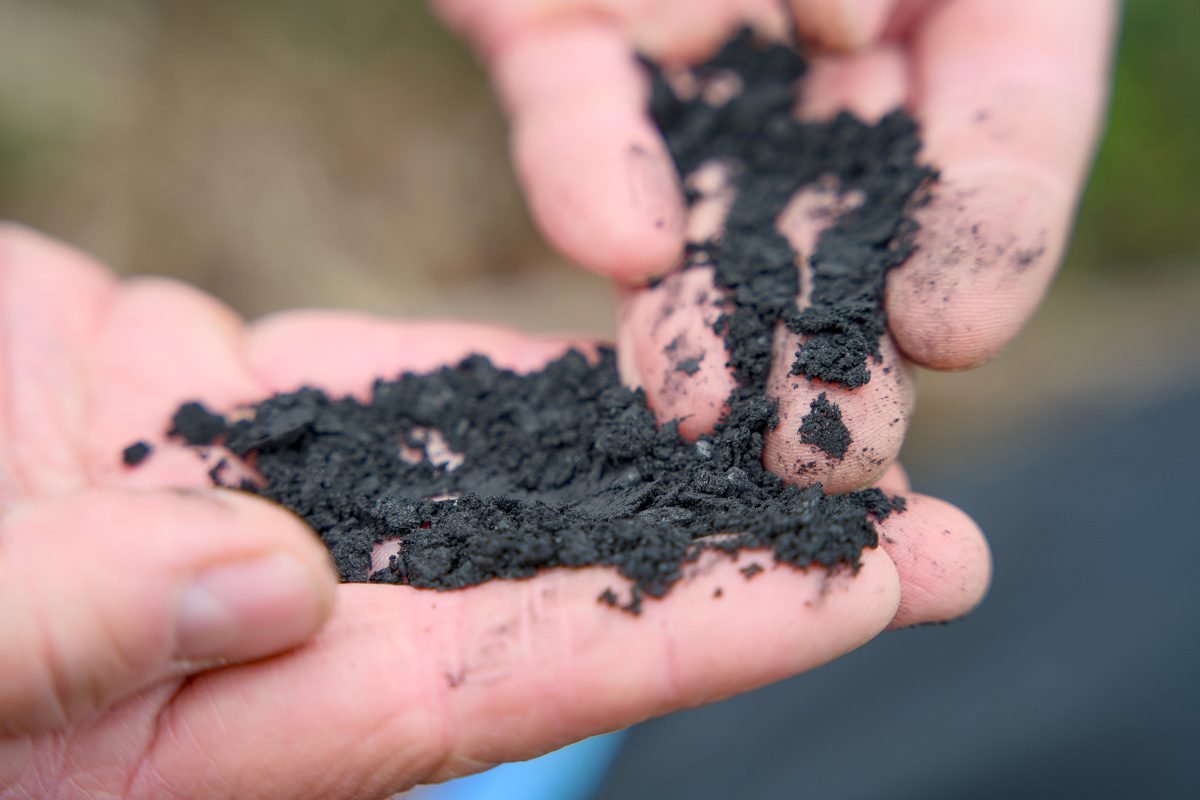
Biochar1 has long been valued for improving soil health. A new review explores the fact that it is also rapidly evolving into a powerful multifunctional material with the potential to tackle some of the world’s most urgent environmental challenges, from water pollution and nutrient loss to carbon emissions and clean energy production.
The review brings together recent advances showing how biochar is moving far beyond its traditional role in soil remediation. Engineered biochar can serve as a critical platform material connecting water, carbon, and energy systems within a circular and sustainable framework, say the authors.
“Biochar is no longer just a soil amendment,” said Wu-Jun Liu. “Our review shows that it is becoming a versatile environmental material that can simultaneously support cleaner water, lower carbon emissions, and renewable energy generation.”
Biochar’s growing importance lies in its unique physical and chemical properties. Its highly porous structure provides vast surface area, while its surface chemistry can be tailored during production. Many biochars also possess natural electrical conductivity and redox activity, enabling them to interact with microbes, pollutants, and gases in ways that conventional materials cannot.
One major emerging application is in biological water treatment and resource recovery. When added to wastewater treatment systems, biochar can act as a habitat for beneficial microorganisms, improving their ability to remove nitrogen and phosphorus pollutants. At the same time, biochar can help recover these nutrients for reuse as fertilizers, supporting more sustainable nutrient cycles.
“Instead of treating wastewater as waste, biochar helps turn it into a resource,” Liu said. “It can enhance microbial processes that recover nutrients and even produce useful energy.”
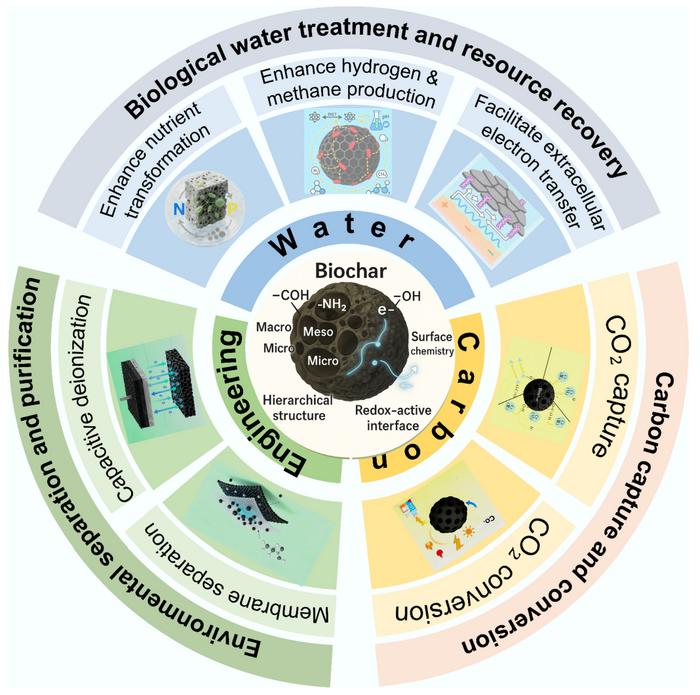
The review also highlights biochar’s role in boosting energy generation in anaerobic digestion systems. In these systems, microbes break down organic waste to produce methane or hydrogen. Biochar can facilitate direct electron transfer between microbes, making these biological processes faster, more stable, and more efficient.
Another fast growing area is carbon capture and conversion. Modified biochars can adsorb carbon dioxide from industrial emissions and, in some cases, catalyze its conversion into fuels or valuable chemicals. Because biochar itself is made from biomass and can store carbon for long periods, these applications may help reduce net greenhouse gas emissions.
Biochar is also increasingly being integrated into advanced separation technologies, including filtration membranes and capacitive deionization systems. In these applications, biochar can improve water purification performance while reducing energy demand and material costs.
Outstanding challenges include long-term stability, large-scale production, and the need to better understand the links between biochar structure and performance. The review calls for future research that combines material design with life cycle and techno-economic assessments.
“Our goal is to guide the rational design of next generation biochars,” said Liu. “With the right engineering and evaluation, biochar could become a cornerstone material for carbon neutral and circular environmental technologies.”
Notes
[1] Biochar is a carbon rich material made by heating agricultural and forestry waste under low oxygen conditions