
We handpick and explain the most important stories at the intersection of climate, land, food and nature over the past fortnight.
This is an online version of Carbon Brief’s fortnightly Cropped email newsletter.
Subscribe for free here.
Key developments
Seabed mining talks stall
UNFINISHED BUSINESS: The International Seabed Authority (ISA) ended a two-week meeting in Kingston, Jamaica, without agreement on the “long-delayed” code for deep-sea mining, which “remains both unfinished and deeply contested”, said Oceanographic. Several countries raised “fundamental scientific, environmental and governance gaps” in the draft regulations, it added. CBC News reported that although the ISA’s executive secretary, Leticia Carvalho, had previously said she “hoped a mining code could be finalised this year”, she “did not provide a new timeline” following the most recent talks.
DOUBLE TROUBLE: Meanwhile, federal regulators in the US have announced that they have identified nearly 70m acres (283,000 square kilometres) of seabed off the Northern Mariana Islands “that could be open to mineral leasing”, reported E&E News. The outlet noted that this recommendation was nearly double the government’s initial area under consideration, announced last autumn.
-
Sign up to Carbon Brief’s free “Cropped” email newsletter. A fortnightly digest of food, land and nature news and views. Sent to your inbox every other Wednesday.
PROCESS PROBLEMS: The CBC News article noted that 40 member countries now support a moratorium on deep-sea mining, but the ISA has “faced mounting pressure in recent months after the US…moved to begin approving mining outside the ISA process”. In the Conversation, an international-law expert from Duke University wrote: “The Trump administration’s attempt to unilaterally exploit the seabed resources of the global commons will severely undermine part of the rules-based international order that the US built and of which it has been the main beneficiary.”
England’s new ‘blueprint’ for land use
‘BLUEPRINT’: The UK government released its “long-awaited and much-delayed” land-use framework, detailing how England can optimise its land for food, housing, climate and nature, reported Carbon Brief. The “blueprint” found that “England has enough land to meet all of its objectives, if land is used efficiently”, the outlet added. The Guardian said that “farmers and campaigners broadly welcomed the framework”, with the president of the National Farmers’ Union saying that implementation “will require clear guidance, the right policy framework and incentives to avoid unintended outcomes”.
PRACTICAL MATTERS: Alongside the framework, the Environment, food and rural affairs committee of the UK parliament “launched a major inquiry into how England’s land is used”, reported FarmingUK. The inquiry will focus on how the land-use framework “works in practice”, it added. The outlet said: “Looking ahead, the committee will scrutinise how government policy [on land use] is coordinated across departments.”
SLOW PROGRESS: Meanwhile, the National Audit Office found that nature-restoration progress across England has “slowed due to ‘recent funding uncertainty’”, reported Agriland. The office examined the Nature for Climate Fund, a programme under the Department for Environment, Food & Rural Affairs, which was established in 2020 and “led to a substantial increase in tree-planting and peatland restoration”, the outlet said. However, the report also found that “targets in England will continue to be missed” without substantial changes, said the Forestry Journal.
News and views
- PROTECTED WATERS: On 10 March, outgoing Chilean president Gabriel Boric signed a decree to expand and “fully protect” two marine protected areas that “harbour the highest concentration of marine species found nowhere else on Earth”, Island Conservation reported. The new administration told the Guardian that its “intention is not to eliminate protections” and, barring legal and technical issues, it will allow the areas “to go forward as planned”.
- BUSINESS CLASH: Following “clashes” with the agribusiness sector, Brazil launched its new climate plan, which calls for a 49-58% reduction in greenhouse gas emissions from 2022 levels by 2035, reported Folha de Sao Paolo. Meanwhile, Climate Home News wrote that the “Tropical Forest Forever Facility” – which Brazil championed – is “unlikely to make payments to rainforest countries until at least 2028”.
- SAVE THE FISHES: A new UN report identified 325 freshwater fish species “requiring coordinated international conservation action” to address declining populations due to overexploitation, habitat degradation and other compounding pressures, said Down to Earth. The report was launched at the 15th Conference of the Parties to the UN Convention on the Conservation of Migratory Species of Wild Animals, which began on Monday in Campo Grande, Brazil.
- FACE PALM: A Climate Home News and SVT investigation found that Neste – the world’s largest producer of sustainable aviation fuel (SAF) – was sourcing “key ingredients from an opaque supply chain” that allowed “fresh palm oil to be passed off as waste”. Neste said it would look into the outlets’ findings, adding that it was “currently not aware of any verified cases of fraud” in its raw-materials sourcing.
- CRITICAL HABITAT: The US government plans to approve the country’s first critical-minerals mine in Patagonia, Arizona, even as locals warn of potential water and biodiversity impacts, Inside Climate News reported. The project site – which holds “one of the largest undeveloped zinc resources in the world” – borders “one of the most important biodiversity hotspots in North America”, which is home to 12 endangered species, including jaguars and Mexican spotted owls, the outlet added.
- RE-PEAT OFFENDERS: More than 370,000 tonnes of peat were exported from Ireland in 2025, with revenues totalling around €40m – “despite there being no known legal commercial peat extraction operation in the country”, said the Irish Times. This represents a higher volume than was exported in 2023 or 2024, but a decrease from the nearly one million tonnes exported in 2020, it added.
- ‘FIELDS OF IRON’: Rural voters in Denmark have begun to “sour” on solar power, with one populist leader in 2024 saying “no to fields of iron!”, said the Guardian. Danish PM Mette Frederiksen “failed to secure a majority” in the country’s general election on Tuesday, where the climate footprint of agriculture has been a concern for voters, reported BBC News.
Spotlight
Plate half full
This week, Carbon Brief looks at the impact of the US-Israel-Iran war on India’s kitchens, restaurants, workers and farmers – and what it means for the climate.
On 23 March, two Indian-flagged tankers made their way through the mine-laden Strait of Hormuz, hugging Iran’s coastline.
The ships are carrying more than 90,000 tonnes of liquefied petroleum gas (LPG), equivalent to roughly one day of the country’s cooking gas consumption.
In India – the world’s second-largest LPG importer – gas is intrinsically tied to food security.
With 60% of these imports sourced from Gulf countries, the war’s immediate impacts have been acutely visible in India’s kitchens and restaurants.
Lunch on the move
Since 10 March, many Indian cities and towns have seen snaking queues and skirmishes breaking out as India’s poor rushed to refill gas cylinders in the heat of an early summer.
As the government prioritised the 340m households that use LPG over commercial establishments, restaurants have faced “catastrophic closures”.
Ashok Vada Pav – birthplace of Mumbai’s vada pav, or potato burger, which has been described as the “soul of the [city’s] working class” – has shut its doors. Ramashraya – serving south Indian breakfasts since 1939 – had to turn away customers who have been coming there for decades.
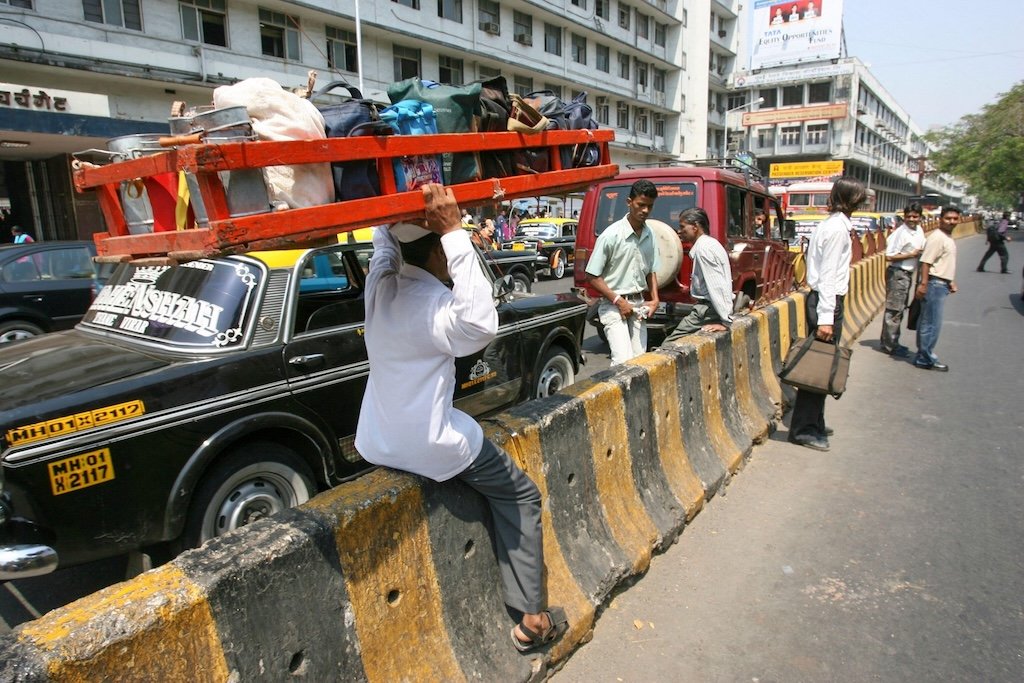
However, hot lunches – cooked at home or purchased from the city’s many canteens – continue to travel the length of Mumbai in tiered steel tiffins carried by the iconic dabbawallahs.
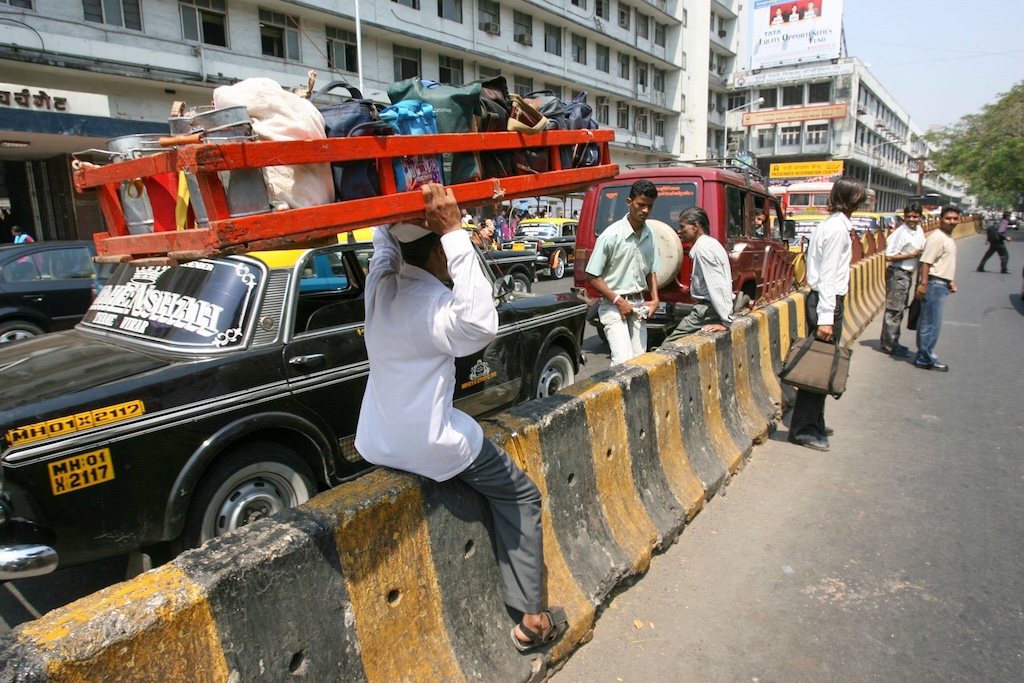
Ramdas Karwande, president of the Mumbai Tiffin Box Suppliers Association, told Carbon Brief that, of the 80,000 lunches that dabbawallahs carry across the city each day, 40% are typically from caterers. That number has halved in the past weeks, he said.
Karwande explained:
“People who come to this city from places far away have no choice but to eat canteen food. But home food is still on the move, because everyone needs to eat somehow.”
Fuel to firewood
In an address to parliament on Monday, India’s prime minister Narendra Modi likened the fallout of the war to that of the Covid-19 pandemic – a comparison that has drawn criticism.
The cooking gas shortages have prompted an exodus of migrant workers leaving cities for their home states, where biomass cooking remains accessible.
Cities, such as Delhi and Mumbai, have put a pause on emissions curbs for dirtier fuels since 14 March, as poorer families facing soaring black-market gas prices turn to wood, kerosene and coal.
While government gas and biogas schemes have led to a decrease in firewood usage in many states over many years, analysts have said the current crisis “offers a critical moment to rethink India’s cooking energy mix”.
In Mumbai’s wealthy suburb of Khar, induction stoves have been “flying off shelves”, Jaffair Sheikh, who sells appliances at an upmarket electronic retail store, told Carbon Brief. He added:
“We’re selling 20 units a day, when we used to sell almost zero before this war.”
However, only 5% of India’s households have access to electric cooking devices and the country’s grid is still largely powered by coal.
Away from the cities, there is a looming fear of the war’s impact on agriculture, given India’s dependence on the Gulf for fertiliser imports.
Siraj Hussain, India’s former agriculture secretary, told Carbon Brief:
“Gas is the main raw material for urea – and urea stocks are grossly insufficient to meet even kharif season (May to July) demand. But if the government can reduce supply to states where excessive fertiliser is used and increase supply to states where consumption is low, to some extent, this deficit will not be as harmful as it would be otherwise.”
Crop stock and biofuel fears
Punjab’s farmers, meanwhile, were already worried about the impact of an early summer on wheat production.
However, Hussain told Carbon Brief that India’s food security in terms of wheat and rice “will not be affected too much” because the country is “sitting on” excessive stocks. He added that he hopes the war will “persuade the government” to reduce its use of rice for ethanol production.
Still, food inflation is already being felt across the country. Karwande added:
“Everyone is tense. The monthly payments we get are going down and running a house is now difficult: the same problems we had during lockdown are back. Oil, sugar, everything has become expensive. This is not just our problem; this is everybody’s problem. The government has to do something.”
Watch, read, listen
FARMERS’ FUTURES: High Country News explored how farmers in the Colorado River basin are dealing with water shortages “amid deep political divisions about the river’s future”.
FOOD SHOCK: Experts on Al Jazeera’s Counting the Cost podcast looked at whether the US-Israel war on Iran could “trigger the next global food shock”.
LYNX IN BIO: BBC News featured the winning images from the Wildlife Photographer of the Year People’s Choice Award. The photos will be on display at London’s Natural History Museum until 12 July.
ECO BREAKDOWN: Mongabay detailed the causes of the “mental health crisis” impacting conservationists, including biodiversity decline, climate change, low wages and burnout.
New science
- Less than half of the Amazon rainforest that was affected by the 2023-24 drought is “expected to recover to pre-drought conditions” within seven years | Proceedings of the National Academy of Sciences
- Beavers can turn the ecosystems surrounding streams into “persistent” sinks of carbon that can sequester an order of magnitude more than non-beaver-modified ecosystems can store | Communications Earth & Environment
- Climate change-induced heat could result in half a trillion hours of lost productivity by 2055 in a low-emissions scenario, disproportionately impacting low-income countries and agricultural workers | GeoHealth
In the diary
- 23 March-2 April: Third meeting of the preparatory commission for the High Seas Treaty, New York
- 24-27 March: 64th session of the Intergovernmental Panel on Climate Change, Bangkok
- 26-29 March: 14th ministerial conference of the World Trade Organization, Yaoundé, Cameroon
Cropped is researched and written by Dr Giuliana Viglione, Aruna Chandrasekhar, Daisy Dunne, Orla Dwyer and Yanine Quiroz. Please send tips and feedback to cropped@carbonbrief.org

The post Cropped 25 March 2026: Seabed mining talks stall | ‘Blueprint’ for land use | India feels Iran war impacts appeared first on Carbon Brief.