
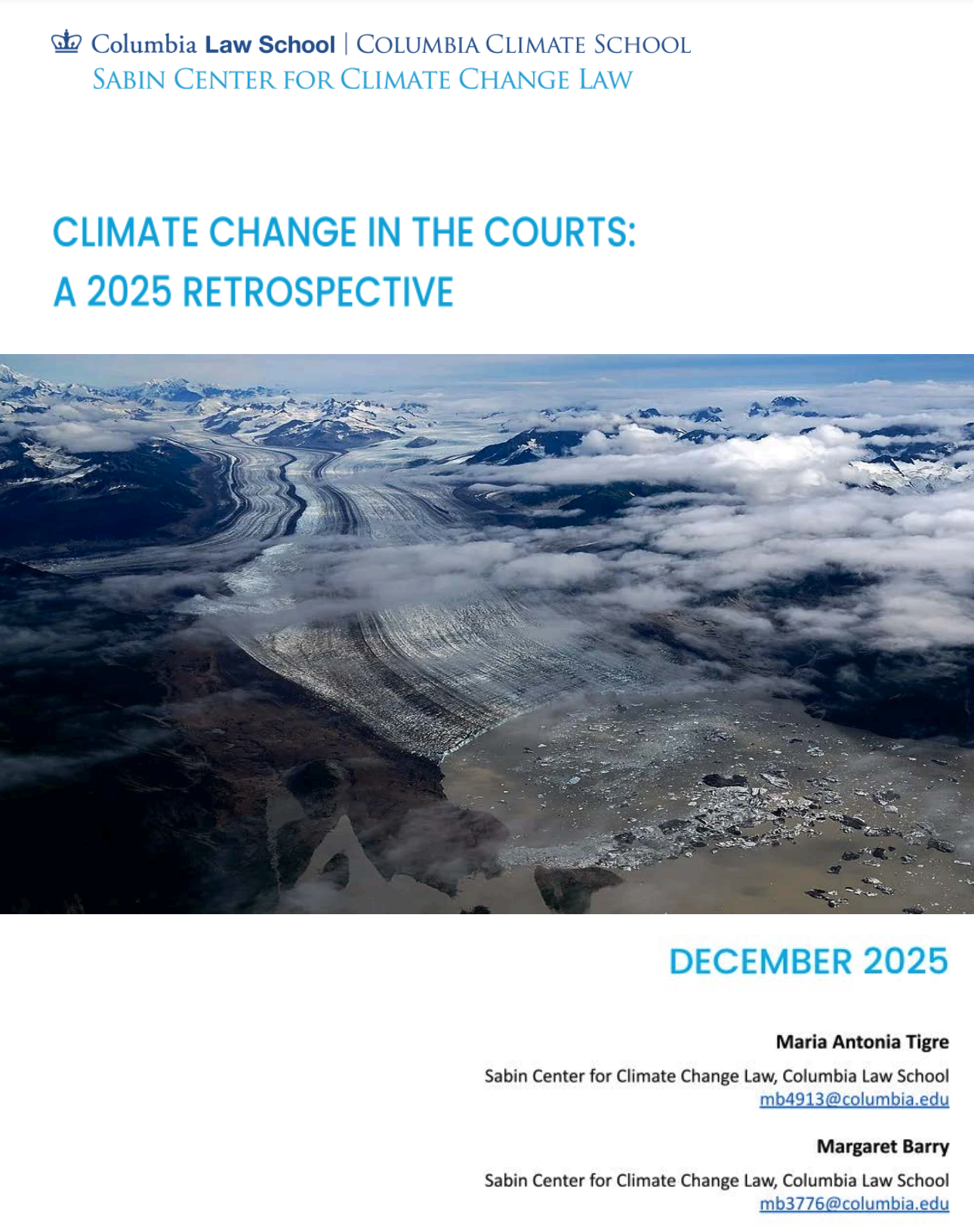
 Last week the Sabin Center published a report that looks back on climate litigation developments in 2025. This third installment in our year-end series provides a snapshot of how the field of climate litigation has evolved over the course of this year. The report also revisits significant rulings from around the world and connects them to eight illustrative themes:
- Climate Change in International Courts and Tribunals. Landmark advisory opinions clarified states’ obligations under international law to address the climate crisis, and domestic courts began to apply the advisory opinions.
- Environmental Assessment and Permitting. Decisions in many jurisdictions called for assessment of downstream impacts, with notable exceptions in the United States. Many decisions also emphasized procedural rigor in environmental assessment.
- Non-Compliance with Climate Commitments. Courts largely maintained a deferential approach to reviewing governments’ implementation of climate policies and obligations.
- Constitutional and Human Rights. In cases focused on rights to life, health, and dignity, and the environment, this year’s rulings reflected a cautious judicial stance toward converting broad constitutional rights into concrete, enforceable climate duties.
- Greenwashing and Climate-Washing. As climate-washing litigation continued to expand in 2025, courts increasingly scrutinized whether climate-related claims reflected verifiable performance, aspirational branding, or deceptive or misleading conduct.
- Corporate Accountability Cases. Several decisions saw courts assess whether traditional tort, nuisance, and civil liability doctrines can apply to large-scale climate harms.
- Standing. The threshold issue of plaintiffs’ standing to bring claims based on alleged climate change-related harms continued to be a contested issue.
- Deregulatory Suits. As in 2024, a significant number of climate cases in the United States this year had deregulatory goals, but this type of climate litigation has not been as present in other jurisdictions.
The report’s discussion of these themes draws on cases collected in the Sabin Center’s Climate Litigation Database (now powered by Climate Policy Radar) and the associated updates published by the Sabin Center.
Read the report here.