
Half a million euros has been donated to assist a research project at the University of Delft (TU Delft), exploring how microbes can be harnessed to break down PFAS, pesticides and microplastics in heavily contaminated sludge, and recover valuable reusable resources.
The Haskoning Innovation & Education Fund announced the funding on 9 December for the multi-year study, which sits at the intersection of hydraulic engineering, water technology, and biotechnology.
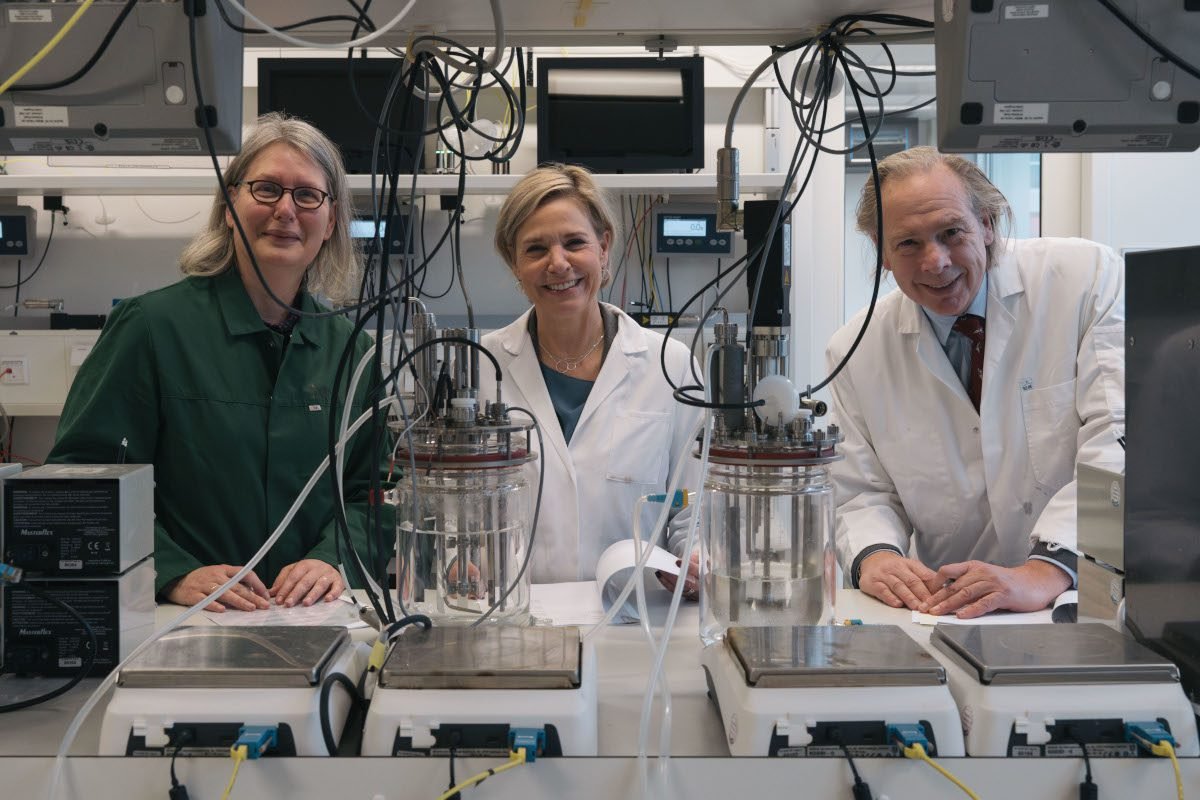
This first project, ‘Sludge to Resource’, focuses on finding bacteria that occur in heavily polluted anaerobic environments, such as dredging depots. The research will explore whether these microorganisms can break down harmful substances or recover reusable raw materials, such as metals or biopolymers. This requires discovering unknown bacterial species and understanding their ‘superpowers’. Think of bacteria that can degrade PFAS, pesticides, or microplastics—a completely natural cleaning process.
Mark van Loosdrecht, Professor of Environmental Biotechnology and Water Treatment at TU Delft: “Of the estimated one billion species of microbes (microscopic organisms such as bacteria, fungi, and algae) on Earth, 99% have never been studied, which means there are untapped sources of unknown microorganisms and metabolic processes. The challenge is to find them and make them usable!”
In the Netherlands, the most contaminated sludge is stored in sludge depots. The Slufter on the Maasvlakte is a well-known example of a location where this sludge is kept. We expect that such sludge depots contain special microorganisms capable of breaking down persistent pollutants such as PFAS, PCBs, pesticides, and pharmaceutical residues.
The group summarises the important steps to be taken as follows:
- Searching for the right bacteria: researchers will take samples of contaminated sludge and analyse which bacteria live there. Using modern techniques such as DNA and protein analysis, they will identify which special properties are present in some bacteria.
- Testing in the lab: promising bacteria will then be cultivated and further studied in the laboratory. Researchers will determine the conditions under which they can grow optimally and break down pollutants effectively.
- Scaling up: ultimately, the goal is to use these bacteria in larger installations (bioreactors)? so they can clean sludge or wastewater on a large scale and recover valuable raw materials. In this way, waste becomes a source of new resources, fitting perfectly within the circular economy.
Heavily contaminated sludge poses a risk to humans and the environment; think of pollutants such as PFAS, PCBs, PAHs, pesticides, or microplastics. “How great would it be if bacteria could convert these into natural, non-harmful substances?”
The TU Delft project ‘Sludge to Resource’ aims to turn this problem into an opportunity, say the researchers. By combining knowledge and technologies from different disciplines, new possibilities are created for material reuse and natural solutions.