
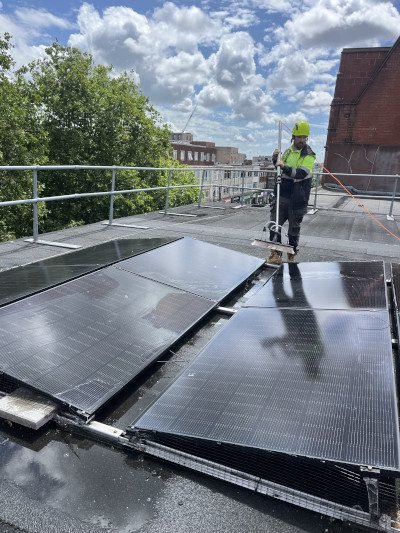
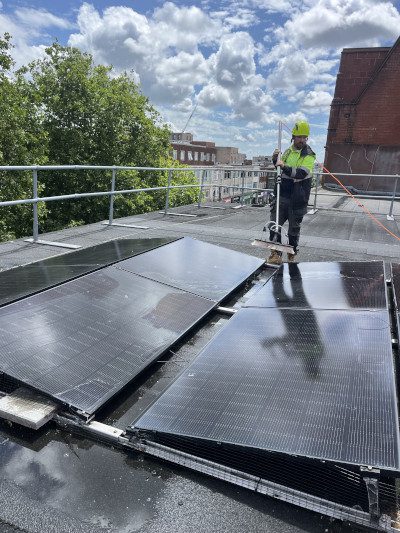
Commercial building owners could be losing a significant proportion of the electricity generated by their rooftop solar arrays through gradual build-ups of dirt and bird droppings, according to maintenance data released by UK commercial solar specialist Absolar.
The company says routine servicing carried out as part of its annual maintenance programme has highlighted the impact that soiling can have on photovoltaic (PV) performance before it becomes visually obvious.
In one example, engineers recorded a 16.6% increase in electricity generation after cleaning a 32-panel rooftop installation at the M Dim Sum restaurant in Southampton. After adjusting the results to account for differences in solar irradiance using independent weather data, Absolar said the improvement remained at around 10%, suggesting the gain could not be explained simply by changing weather conditions.
The findings are based on a single commercial installation and the company has not indicated how representative the result is of its wider maintenance portfolio. Nevertheless, they highlight an operational issue that is often overlooked once solar systems have been commissioned.
Solar soiling – the accumulation of dust, pollen, airborne pollution, leaves and bird droppings on panel surfaces – is known to reduce the amount of sunlight reaching photovoltaic cells. The extent of the losses varies widely depending on local conditions, weather patterns and the frequency of maintenance.
Dr Victoria Aragon, renewable energy specialist at Absolar, said: “Most building owners assume solar panels just get on with the job once they’re installed, but our engineers see the reality every time we’re out on a roof. Bird droppings, dust, pollen and general soiling build up gradually and most people never notice the drop in output because there’s no obvious sign. That is, until you compare the numbers before and after a clean and see a double digit swing. That’s revenue a business is simply leaving to rot on the roof.”
The company says servicing provides an opportunity not only to clean panels but also to identify faults or component deterioration before they affect system performance.
Dr Aragon added: “We carry out full system inspections, so every maintenance visit includes a check of component condition, service logs and system efficiency. This helps us to catch early signs of wear or faults before they become costly problems.”
According to Absolar, some of the heaviest soiling encountered during this year’s maintenance programme has been on installations close to trees or bird roosting sites, including one commercial system in Ipswich where a substantial area of the array was affected by bird droppings.
The company argues that regular inspection and cleaning should form part of the long-term management of commercial solar assets, particularly where environmental conditions increase the risk of soiling.
“Businesses invest in solar to cut energy costs,” said Dr Aragon. “Our findings suggest many could improve returns simply by making sure their systems are properly maintained. So, whether that’s with Absolar or another provider, it’s a conversation worth having.”