

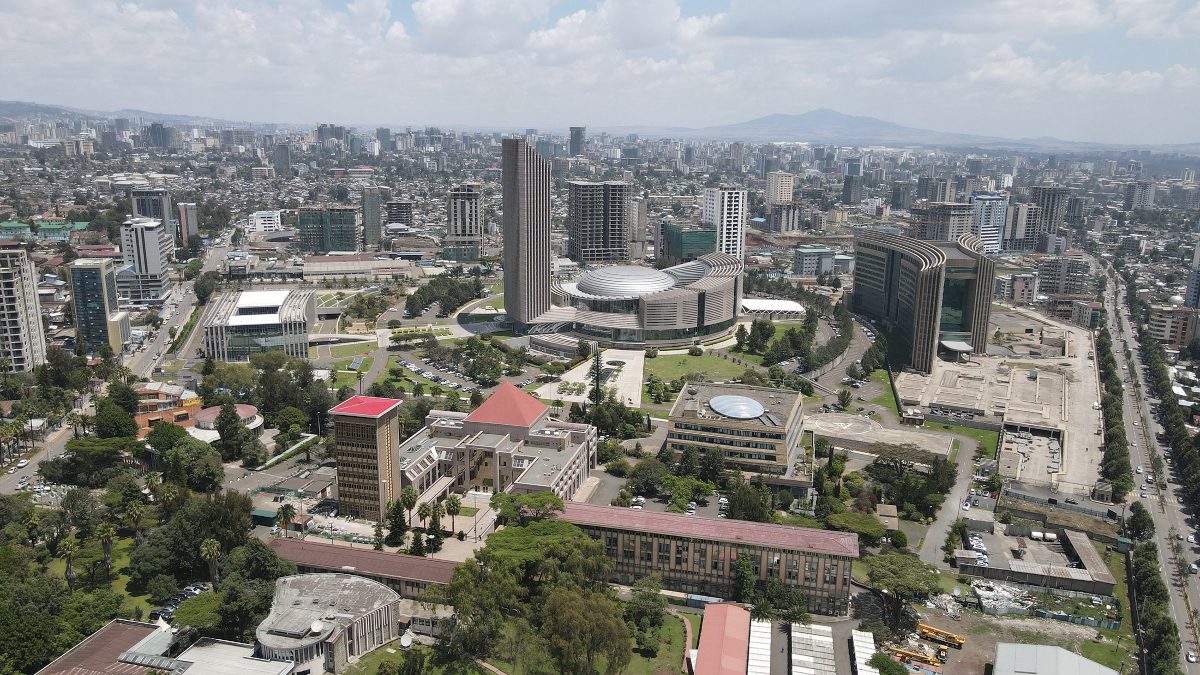
Air pollution is estimated to cause around 48,881 adult deaths a year in Nepal1 and more than 25,000 deaths in Ethiopia,2 alongside significant health harm across Malawi’s fast-growing cities. To combat this, researchers from the University of Surrey have developed three new evidence-based toolkits, co-authored with local partners in each country, to help planners and leaders use urban greening to cut exposure to pollution, cool overheating streets and ease flood risk.
The Urban Greening ‘How To’ Toolkits have been developed by Surrey’s Global Centre for Clean Air Research (GCARE) through the UKRI-funded RECLAIM Network Plus, and co-authored with local scientists, government officials and universities in each country. The bespoke versions extend Surrey’s original UK toolkit, published in December 2025, to three geographies where rapid urbanisation, traffic emissions, biomass burning and rising temperatures are increasingly damaging public health.
Each toolkit is tailored to the specific challenges of its country. The Nepal toolkit covers air pollution, biodiversity loss and urban heat. The Ethiopia toolkit covers air pollution, health and well-being, and urban heat. The Malawi toolkit covers air pollution, flood risk and urban heat. All three set out which interventions work, which to avoid, and how to adapt designs to local conditions.
Professor Prashant Kumar, Founding Director of the Global Centre for Clean Air Research at the University of Surrey and Principal Investigator of the RECLAIM Network Plus, said:
“Urban greening works best when it is designed for the place it serves. The pressures on cities in Nepal, Ethiopia and Malawi are not the same as those in the UK, and the right response has to reflect local climate, water availability, vegetation and the way people actually use public space. These toolkits put evidence in the hands of the planners, councils and ministries who can act on it.”
In Nepal, ambient PM₂.₅ exposure was estimated to contribute to around 48,881 adult deaths in a recent study. In Addis Ababa, average annual PM₂.₅ concentrations sit at around 32.8 µg/m³ – more than six times the World Health Organisation guideline. In Malawi, around 97% of households still rely on biomass fuels for cooking, contributing to high particulate exposure in cities.
The toolkits draw on peer-reviewed evidence to set out what works. Continuous hedges of around two metres in height, with sufficient thickness and species that have complex, waxy or hairy leaves, can reduce roadside pollution by up to 63%. Mixed planting that combines trees and hedges can cut roadside pollution by up to 52% in open road conditions. Urban parks and tree cover can lower local land surface temperatures by 2 to 4°C during peak summer periods, with measurable cooling effects already recorded in Kathmandu Valley parks and Addis Ababa green spaces. Each toolkit also flags common mistakes, such as planting trees in narrow street canyons where they can trap polluted air rather than clear it.
The toolkits were co-designed with country partners to make sure each version reflects local context, policy and lived experience. The Nepal toolkit was developed with co-authors from the Government of Nepal, Tribhuvan University’s Institute of Forestry, Nepal Energy and Environment Development Services, the University of Southern Queensland and North Carolina State University. The Ethiopia toolkit was co-authored with Addis Ababa University and the Addis Ababa City Environment Protection Authority. The Malawi toolkit was developed with Kamuzu University of Health Sciences and the University of Malawi.
Ganesh Paudel, Joint Secretary, Ministry of Forests and Environment, Nepal, said:
“As Nepal is rapidly urbanising, this toolkit is published in such a time that it will serve as a guideline to ensure resilient urbanisation. The practical examples from Nepal makes the toolkit more contextual and adaptable by local governments and urban planners. This toolkit will be used to build local capacity and support evidence-based planning and implementation regarding urban greening. We expect it to contribute to more resilient ecosystems, more liveable cities and stronger community engagement for sustainable development in Nepal.”
Araya Asfaw, Adjunct Professor, Institute of Geophysics, Space Science, and Astronomy, Addis Ababa University, said:
“Ethiopia’s corridor development program, especially in Addis Ababa, is one of the most ambitious urban transformation efforts in Africa right now. The goal is to make cities more liveable, connected, and economically vibrant. Green open spaces, parks, river fronts and non-motorised transport are parts of the program along with wider roads to improve traffic flow, pedestrian walkways and bike lanes. The toolkit is perfectly aligned with the program and therefore, efforts will be made to integrate it. Undoubtedly, this will help reduce pollution exposure and urban heat while encouraging physical activity.”
The three new toolkits were made possible by Surrey’s Official Development Assistance (ODA) funding, which supports research that benefits low- and middle-income countries. They build on Surrey’s wider work on urban greening through the UKRI-funded RECLAIM Network Plus, GP4Streets, GreenCities and GREENIN Micro Network Plus projects, alongside the UGPN-funded UGPN-NBS and GREENICON projects.
The toolkits can be found here: https://reclaim-network.org/urban-greening-how-to-toolkits-international-adaptations
Notes
[1] Dhital, N.B., Sapkota, R.P., Sharjeel, A. and Yang, H.H., 2024. Estimating potentially preventable ambient PM2.5 -attributable adult deaths by improving air quality in Nepal. Atmospheric Pollution Research, 15(8), p.102175.
[2] UNDP (2024). Ethiopia Environmental Protection Agency and Ethiopia Ministry of Health. Investment Case Study for Air Pollution Reduction in Ethiopia. United Nations Development Programme.