

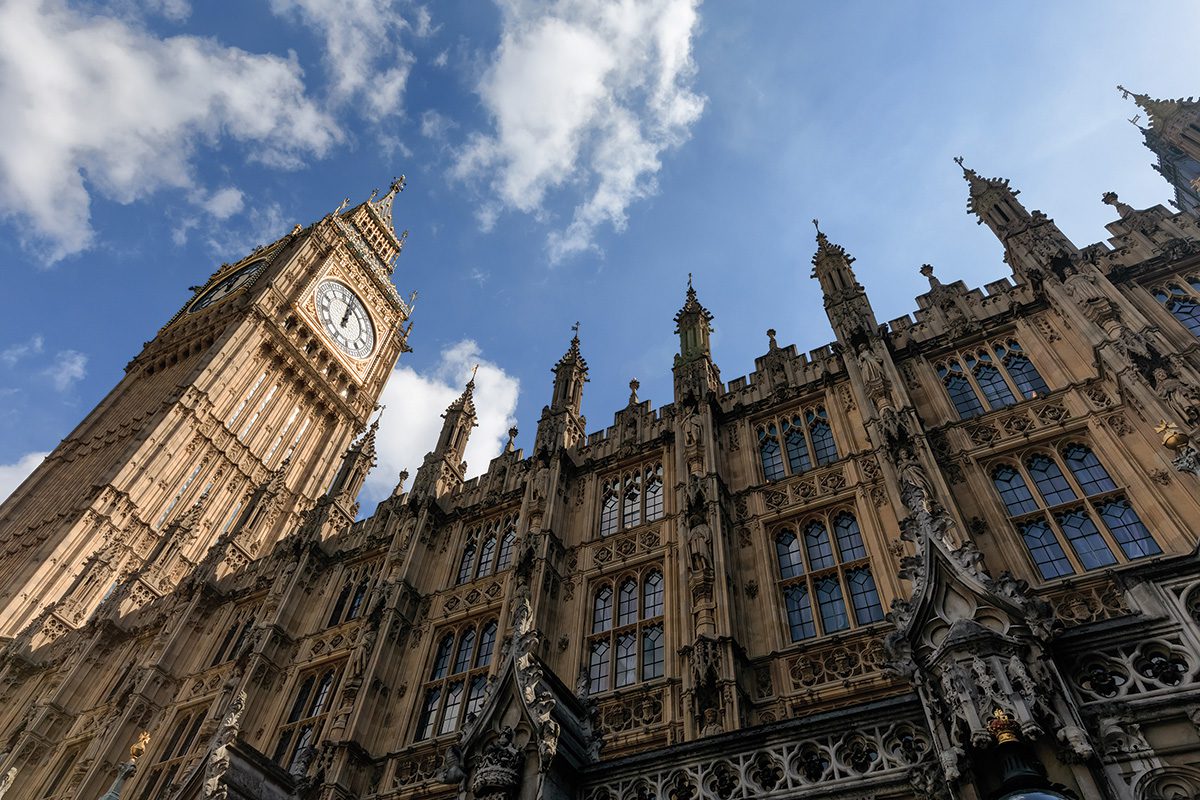
Overshadowed politically by mounting speculation over Sir Keir Starmer’s leadership, the King’s Speech nevertheless set out an expansive programme of infrastructure and regulatory reform, with energy independence, grid resilience and the future governance of the UK water sector emerging as major themes alongside headline measures on immigration, NHS restructuring, transport infrastructure and closer EU cooperation.
Measures intended to expedite the transition to low-carbon energy systems were centred chiefly on the Energy Independence Bill, which is expected to support investment in clean power, grid infrastructure and nuclear generation, while also pursuing reforms to electricity market pricing and energy regulation.
The Government said the Energy Independence Bill would help “scale up homegrown renewable energy”, strengthen energy resilience and reduce exposure to volatile international fossil fuel markets.
Reforms that appeared to attract comment include some intended to give households and businesses with solar panels, batteries, electric vehicles and heat pumps a greater role in balancing the electricity grid.
Rachel Fletcher, Director of Economics and Regulation at Octopus Energy, said: “We’ve long campaigned against unfair charges when people sell energy back to the grid from their solar panels, batteries and electric cars, so it’s great to see the government taking action to fix this. People can now be even more confident buying EVs and home batteries – cutting their bills whilst making the grid cheaper and more efficient for everyone else too. The System Operator must now act quickly to pay consumers instead of fossil fuel generators, slashing the cost of power for everyone.”
Her comments appeared to relate to wider Government proposals designed to encourage more flexible electricity demand and make greater use of distributed low-carbon technologies. Ministers have indicated that reforms to balancing markets and electricity pricing could allow consumers to benefit more directly from periods of surplus renewable generation, while reducing reliance on gas-fired generation used to stabilise the grid.
The electrification of homes and the expansion of renewable generation also drew comment from manufacturers and clean heating specialists.
Sachin Vibhute, Technical Consultant at LG, said: “The scaling of renewable energy is moving from a far-off ambition to a national priority.
“Continued government support for ‘homegrown’ energy sources was evident. The introduction of the Energy Independence Bill, signals real intent to accelerate the transition to low-carbon homes and greater energy independence.
“However, the sector remains hindered by an acute shortage of skilled workers. The UK urgently needs more specialised training and upskilling, to meet the rising demand for green technologies like heat pumps and solar installations.
The availability of suitably trained installers and engineers is likely to be a key practical test of the Government’s ambitions, particularly if demand for heat pumps, solar installations, battery storage and other low-carbon technologies increases as is hoped.
Questions over infrastructure delivery and grid capacity also featured heavily in responses from planning and energy specialists.
Stuart Campbell, Head of Energy Transactional Services at Carter Jonas, said: “The energy sector will welcome today’s announcement of an Energy Independence Bill but the test will be delivery. The UK already has strong policy support for solar and wind energy, battery storage and grid investment, but projects continue to be constrained by grid capacity, connection delays and uncertainty around infrastructure delivery.
“The growing importance of demand connections must also be recognised. Data centres, advanced manufacturing and electrified transport are all increasing pressure on the electricity system. Strategic energy planning therefore needs to take a whole-system approach, looking at generation, storage, transmission and demand together.
“The Bill should therefore go beyond broad ambition. It should provide a clearer and more investable framework for developers, landowners and investors, with stronger coordination between generation, storage, transmission and demand. It should also help to accelerate nationally significant energy infrastructure and provide greater certainty around the implementation of NESO’s connections reforms.
“Energy independence is now both an economic and infrastructure priority. If implemented effectively, the Bill could strengthen long-term investor confidence, support domestic renewable generation and help reduce the UK’s exposure to volatile international energy markets.”
The emphasis on connection reform reflects mounting concern that planning systems and grid access are failing to keep pace with clean energy deployment.
Nuclear energy continues to be a key part of the Government’s broader energy resilience agenda, and the speech referenced reforms intended to accelerate planning and regulatory approval processes.
Kevin Gibbs, Senior Consultant in the Planning, Infrastructure and Environment team at Charles Russell Speechlys, said:
“The potential inclusion of an Energy Independence Bill suggests the Government is preparing to bolster measures to accelerate planning and regulatory approval for clean energy projects and strengthen our energy independence and resilience.
“If the Bill is used to push through the proposed ‘Fingleton’ reforms to nuclear planning and regulatory rules, it could be a significant moment for the sector.”
The “Fingleton” reforms refer to the Government-backed Nuclear Regulatory Review led by John Fingleton, which called for a “radical reset” of the UK’s nuclear regulatory system. The review argued that new nuclear projects have been slowed by overlapping regulators, complex consenting processes and insufficiently proportionate decision-making. Ministers have accepted the principle of its 47 recommendations, including a lead-regulator model, measures to reduce duplication, and a proposed Commission on Nuclear Regulation to resolve cross-cutting issues. For developers of large nuclear and small modular reactor projects, the significance would lie in whether the Energy Independence Bill turns these reforms into legally enforceable changes that shorten approval timelines while maintaining safety and environmental standards.
Gibbs continued: “One of the biggest challenges facing new nuclear projects has been the length and complexity of the planning and regulatory process. The Government is now sharpening it’s focus on smarter regulation and improved coordination to provide a quicker and more certain route to the delivery of nuclear projects, including the emerging small modular reactor programmes.
“Investors have been looking for clearer signals from Government for some time, and regulatory reform is likely to be seen as a test of how serious ministers are about speeding up delivery.
“The question is whether the proposed reforms do remove barriers to delivery without creating further uncertainty elsewhere in the system. The industry will want to see practical measures that can accelerate projects, not just another round of structural reform.”
Alongside energy policy, the Government’s proposed Water Reform Bill drew strong reaction from environmental organisations, planners and infrastructure specialists.
The legislation follows the publication of the Cunliffe review and the Government’s subsequent white paper, A New Vision for Water, which outlined proposals including the abolition of Ofwat and the creation of a new integrated regulator intended to improve environmental performance and modernise the sector.
James Cattermole, Partner in Carter Jonas’ Consents team, said: “Water reform is much-needed, but it must be judged on delivery, not simply regulation.
“Public concern has understandably focused on pollution, service failures, bills and the performance of water companies, but the deeper issue is that the current framework has allowed long-term infrastructure pressures to build over many years.
“Water supply, wastewater capacity, abstraction limits and environmental constraints are no longer secondary technical matters – in some areas they are now defining constraints on housing delivery and economic growth.
“A future Water Bill must therefore help infrastructure to be planned earlier, consented more efficiently and funded with greater certainty.
“Abolishing Ofwat and creating a new integrated regulator may help, but only if it reduces fragmentation rather than replicating it.
“The opportunity is to move from a reactive system to one that identifies need, capacity and constraint much earlier, with stronger links between water resource planning and local plan-making. Water infrastructure is as critical to growth as roads, rail or electricity and it should be treated accordingly.”
Environmental organisations broadly welcomed the inclusion of a Water Reform Bill, although some warned that environmental protection must not become secondary to economic growth priorities.
The Rivers Trust described the legislation as “a significant moment for the water environment”, while warning that reform must not delay action under existing environmental law.
Mark Lloyd, Chief Executive of The Rivers Trust, said: “The King’s Speech marks a significant moment for the water environment and a step towards changing a system that has failed communities and the environment for decades. We hope to see a future where water is managed much more effectively, taking account of the many factors that impact waterways. We want to see polluters paying for the damage they cause, and all those who benefit contributing to the restoration of resilient rivers and catchments.”
However, he added: “Water reform is desperately needed, but this new law must not be used as a reason to delay action or hold off from enforcing existing laws as it completes its passage through parliament.”
The Rivers Trust also expressed concern that environmental issues appeared less prominent within the broader political narrative surrounding the King’s Speech, arguing that environmental protection should remain central to economic policy rather than treated as a competing objective.
Certainly, the legislative push towards electrification, low-carbon power deployment and environmental infrastructure reform appears undiminished. But harder political and economic realities may soon impinge. Delivering reforms of this scale will require sustained political capital at a time when fiscal constraints, geopolitical instability and increasingly contested narratives around net zero are placing governments under growing pressure.