

A UK-based concentrated solar thermal startup, Odqa, has announced two technology milestones it says could help heavy industry reduce reliance on fossil fuels for high-temperature processes.
The company reported that it has successfully generated air temperatures of 800°C using concentrated solar power and applied the heat in an industrial process — a level required for sectors such as metals, cement, glass and ceramics. Industrial heat is estimated to account for roughly 20% of global carbon emissions.1
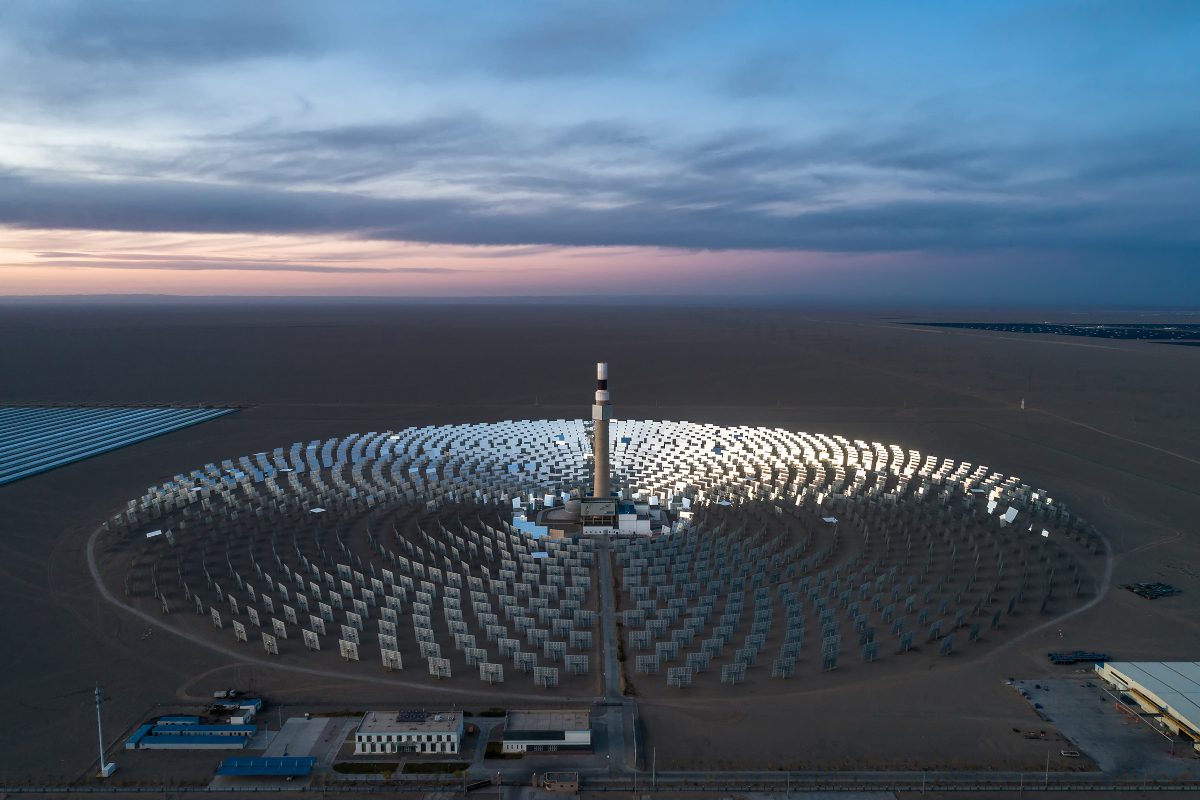
The demonstration took place at the Plataforma Solar de Almería (PSA) in Spain, where Odqa deployed a system combining a solar tower, air-based receiver and thermal rock storage. According to the company, the facility used stored solar heat to dry mineral rock, demonstrating the potential for continuous operation beyond daylight hours.
In a separate laboratory trial at its Oxford site, the company said it achieved another milestone by melting aluminium using only hot air. The bench-scale experiment is intended to demonstrate the feasibility of its approach for high-temperature applications in the metals sector, where temperatures can exceed 1,000°C.
High-temperature industrial processes remain one of the most difficult areas to decarbonise. While electrification and heat pumps are widely used for lower-temperature applications, they can struggle to reach the extreme heat levels required for heavy industry or may face cost and infrastructure challenges at scale.
“The reason most heavy industry hasn’t decarbonised its heat isn’t a lack of ambition, it’s the lack of a solution that works at the temperature and cost profile they actually need,” said Chris Kimmett, CEO of Odqa. “Our 800°C field trials in Spain and our success melting aluminium in Oxford prove that our technology works at the temperatures and conditions that matter. We are giving industry a path to clean, extreme heat that unlocks energy security and stable, long-term cost control.”
The company said its system uses a field of mirrors to concentrate sunlight and generate high-temperature air, with thermal storage designed to provide heat on demand. It argues that this approach could reduce exposure to volatile fossil fuel markets while supporting net-zero targets.
This kind of announcement arrives at a critical juncture for heavy industry as energy availability, security and cost have become more uncertain. Recent geopolitical developments have exposed the risks of relying on imported fossil fuels. By capturing the heat from sunlight to generate zero-carbon industrial-grade temperatures, Odqa said it enables operators to achieve absolute energy security and predictable costs while hitting net-zero targets years ahead of schedule.