
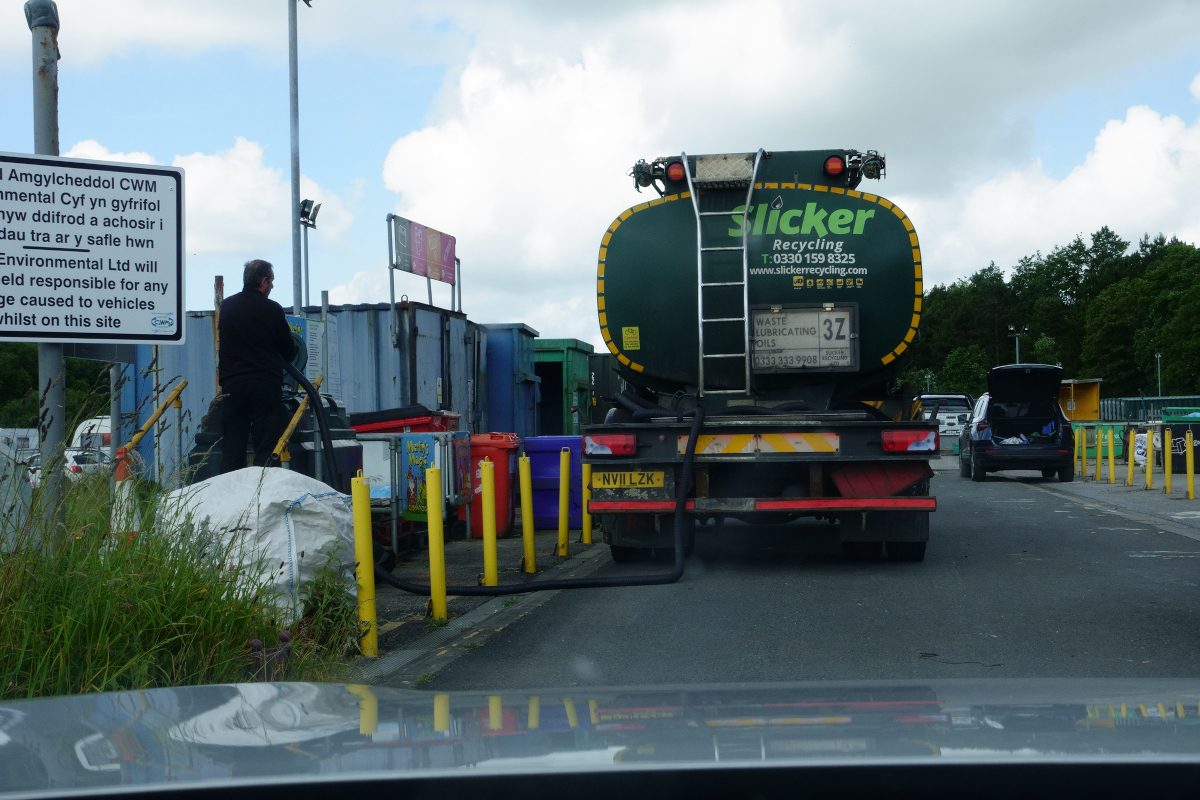
Permitted waste facilities in England and Wales will have to record every load of controlled waste through a new digital service from 1 October, with operators given two working days to submit the required data
Waste operators in England and Wales have just over two weeks to prepare for the first phase of mandatory digital waste tracking. Under the new system, organisations licensed or permitted to receive controlled waste will have to enter details of every load using the Government’s new “Report receipt of waste” service. The requirement applies to permitted operations, installations and mobile plants, including permitted sites located at the same location where waste is produced.1
Most household, commercial and industrial waste is classed as controlled waste.
The change marks the first operational phase of the UK’s move towards mandatory digital waste tracking, intended ultimately to replace fragmented paper-based records with a more comprehensive digital record of waste movements.
For operators affected by the October deadline, however, the immediate task is to ensure that systems and working practices are capable of collecting and submitting the required information within the prescribed timeframe.
Waste receipt records must normally be submitted within two working days, beginning on the day after the waste is received. A load arriving on Monday, for example, must be reported and assigned a unique reference number by 11.59pm on Wednesday.2
The information required includes details of the waste movement, carrier and receiving site; waste classification codes; recovery and disposal codes; and, where applicable, information on persistent organic pollutants (POPs) and hazardous properties.3
Software preparations
Operators can submit data using software connected to the Government service through an application programming interface (API). Defra maintains a non-exhaustive list of compatible products, which was most recently updated on 14 September, little more than two weeks before the new requirement takes effect.4
To qualify as compatible, software must integrate with the Report receipt of waste API and pass production approval tests covering 14 scenarios. Some products have exemptions from particular tests – for example, where the software does not handle hazardous waste – meaning operators are advised to check that their chosen product is suitable for the types of waste they receive.5
Businesses are not obliged to select a product from Defra’s list and can use another provider, provided its software can record the legally required information and transmit it through the API.
Defra also stresses that inclusion on its list does not transfer responsibility for compliance to the software supplier. Operators remain responsible for ensuring that the product they use meets their regulatory requirements.6
Paperwork continues – for now
One potentially important point for operators preparing for October is that the new reporting requirement does not immediately eliminate existing waste paperwork.
Until further notice, waste transfer notes, hazardous waste consignment notes and Annex VII forms must continue to be completed where required, alongside reporting through the new digital service. Waste facilities must also continue submitting waste returns required by their environmental permits and hazardous waste consignee returns.7
Government and environmental regulators are developing transition arrangements under which service data can eventually replace some of these existing returns.
The rules also contain provisions for system outages. Where an operator cannot make a submission because of an outage, it must generally notify its regulator, make and retain a written record within the normal two-working-day period and transfer the information to the digital service within seven working days after the outage is resolved.8
There is an exemption for people considered digitally excluded, although the threshold is relatively narrow. It applies where using digital tools is impractical because of age, disability or location, or in certain cases involving religious beliefs incompatible with electronic communications. A preference for paper, lack of familiarity with software, or the additional cost or time involved in digital compliance does not in itself qualify.9
Enforcement
Failure to comply with the new requirements will constitute an offence.
Available enforcement measures include compliance notices, enforcement cost recovery notices, a fixed monetary penalty of £1,000, variable monetary penalties with no specified upper limit, and criminal prosecution carrying an unlimited fine. Knowingly making false or misleading statements or records to regulators can result in imprisonment for up to two years.10
The October change applies initially to permitted and licensed waste-receiving sites in England and Wales. The equivalent requirement is due to take effect in Scotland and Northern Ireland from 1 January 2027.11
The wider digital waste tracking programme is intended to provide regulators and industry with more timely and consistent information about the movement and fate of waste, while making it harder for waste to disappear from the legitimate management chain.
For businesses covered by the first phase, however, the approaching 1 October deadline makes the immediate priority more prosaic: establishing which data must be captured, ensuring that staff and software can record it accurately, and putting procedures in place to meet the two-working-day reporting window.
Notes
[1] Department for Environment, Food & Rural Affairs (Defra) and Welsh Government, “Digital waste tracking: check if you need to report the waste you receive”, published 7 August 2026; [2] Ibid; [3] Ibid; [4] Defra, Report receipt of waste: choose a software provider, updated 14 September 2026; [5] Ibid; [6] Ibid; [7] Defra and Welsh Government, Digital waste tracking: check if you need to report the waste you receive; [8] Ibid; [9] Ibid; [10] Ibid; [11] Defra, Report receipt of waste: choose a software provider.