
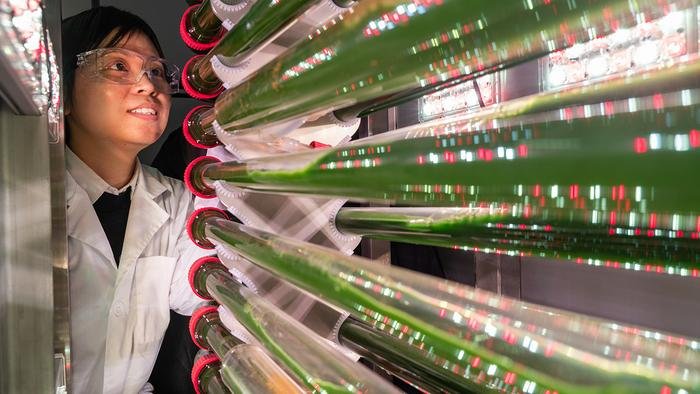
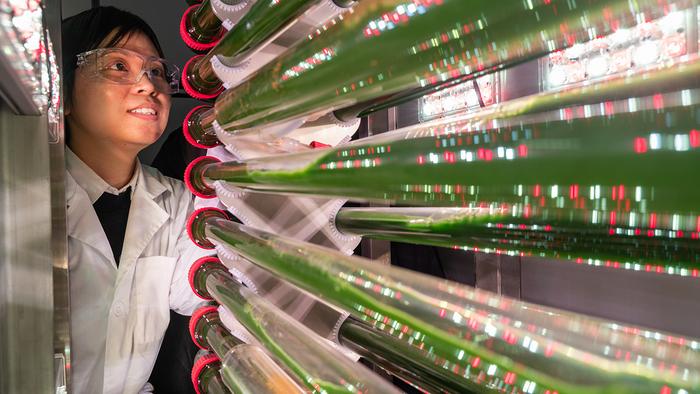
A research team at the University of Missouri has developed a genetically engineered algae strain they say is designed to capture microplastics in wastewater, while also enabling their reuse in new materials.
Led by Susie Dai, professor of engineering and principal investigator at the Bond Life Sciences Centre, the work addresses a key gap in existing treatment systems, which struggle to remove smaller plastic particles.
“Microplastics are pollutants found almost everywhere in the environment, such as in ponds, lakes, rivers, wastewater and the fish that we consume,” Dai said.
“Currently, most wastewater treatment plants can only remove large particles of plastic, but microplastics are so small that they slip through and end up in drinking water, polluting the environment and harming ecosystems.”
How the technology works
The team engineered algae to produce limonene, a naturally occurring oil that makes the organism water-repellent. This property enables it to bind with microplastics — which are also hydrophobic — forming clumps that sink and can be removed more easily.
The process combines three functions within a single system:
Microplastic capture via hydrophobic aggregation
Wastewater treatment, as algae absorb excess nutrients
Material recovery, with collected plastics repurposed into bioplastic products
“By removing the microplastics, cleaning the wastewater and eventually using the removed microplastics to create bioplastic products for good, we can tackle three issues with one approach,” Dai said.
Circular potential and scale-up
The captured material could be converted into composite plastic films, aligning with circular economy goals by turning pollutants into usable products.
The algae can grow directly in wastewater streams, suggesting compatibility with existing infrastructure. Dai’s team is now exploring integration into municipal treatment plants.
“While our research is still in the early stages, our eventual goal is to integrate this new process into existing wastewater treatment plants so cities can clean their water more effectively and reduce pollution while creating useful products at the same time.”
The research group is already operating a 100-litre bioreactor, known as “Shrek”, currently used for processing industrial flue gas. The system provides a platform for scaling the algae-based approach to wastewater and broader pollution control applications.
The study, “Remediation and upcycling of microplastics by algae”, is published in Nature Communications.