
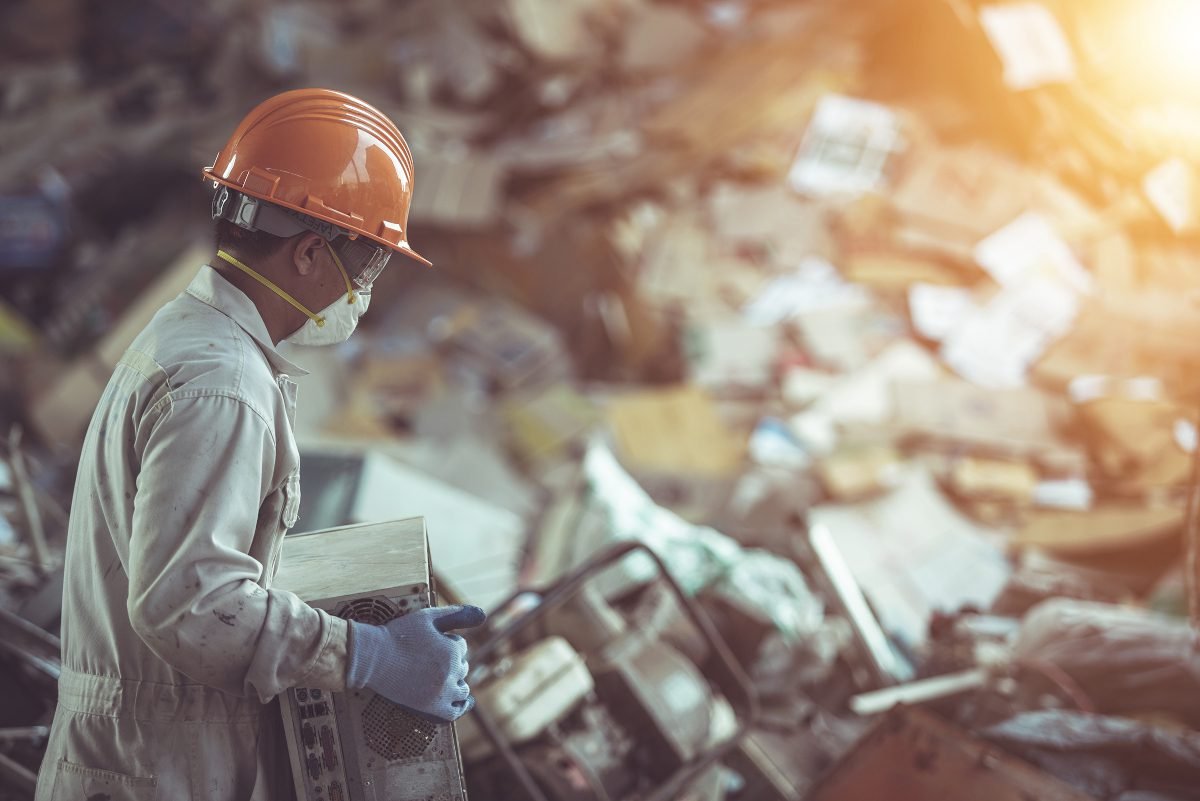
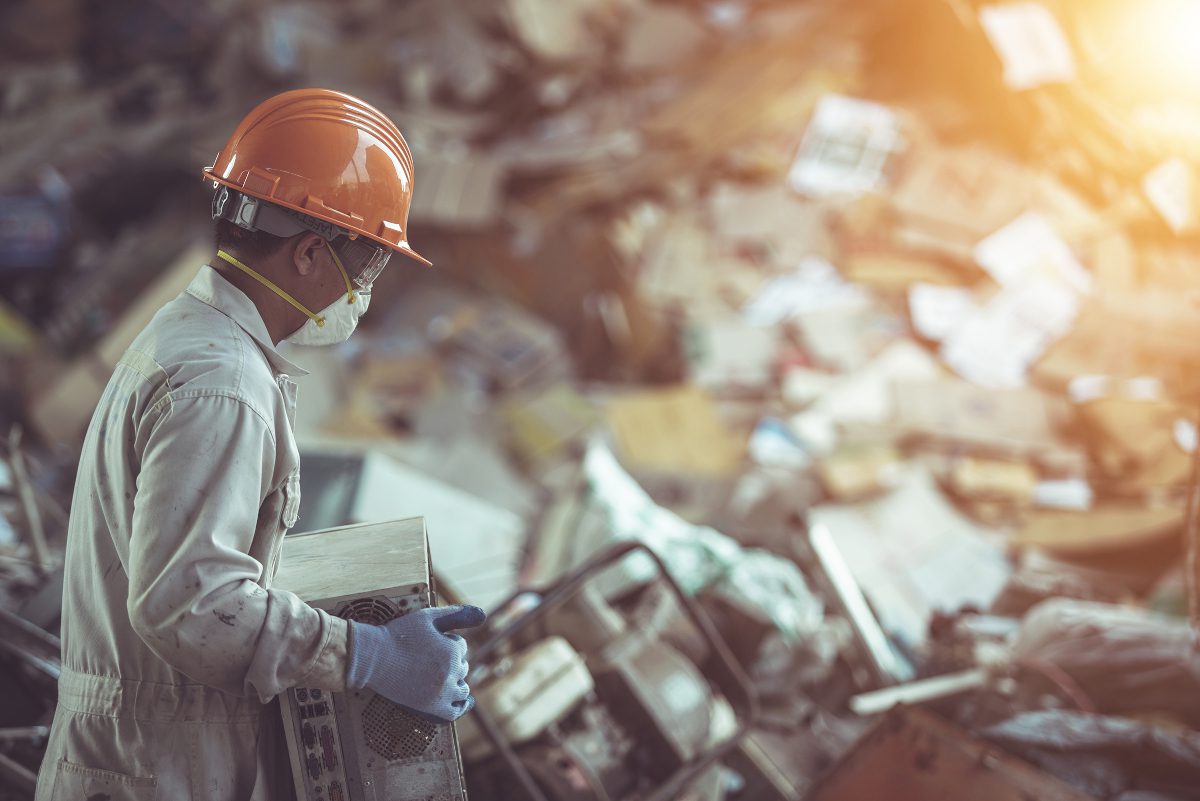
Europe could meet more than half of its future demand for critical raw materials through recycling and recovery from waste streams by 2050, according to what researchers describe as the most comprehensive assessment yet of the continent’s “urban mine”.
Experts involved in the EU-funded FutuRaM project said improved recovery systems and circular economy policies could enable Europe to recover between 4.1 and 5.7 million tonnes of critical raw materials annually by mid-century, potentially replacing up to 56% of primary raw material demand under a circular economy scenario.
The findings were presented at the conclusion of the FutuRaM (Future Availability of Secondary Raw Materials) project, which mapped critical materials embedded in waste streams across the EU27+4 region, covering the EU, UK, Switzerland, Iceland and Norway.
Researchers analysed 42 critical elements found in waste electrical equipment, batteries, end-of-life vehicles, industrial slags and ashes, construction waste, mining waste and dismantled wind turbines.
The report argues that Europe’s discarded products and infrastructure contain a vast and underused reserve of materials essential for batteries, renewable energy systems, electric vehicles, electronics and digital technologies.
“This report allows policymakers, researchers, and industry to assess Europe’s ‘urban mine’ with unprecedented clarity. The data and infrastructure we have built provides a foundation for evidence-based policymaking, long-term monitoring, and strategic investment decisions,” said Pascal Leroy, Director General of the Waste Electrical and Electronic Equipment (WEEE) Forum.
“Whether Europe realises this potential depends on the choices made now – on legislation, recycling infrastructure, and data collection. Considering these powerful findings, our mindset needs to shift to think of ‘secondary’ sources of CRMs as the new primary source.”
The research found that 5.2 million tonnes of critical raw materials were embedded in products placed on the European market in 2022, compared with 2.1 million tonnes contained in waste streams and 1.4 million tonnes ultimately recovered.
By 2050, waste generation containing critical raw materials could rise to between 5.2 and 6.4 million tonnes annually as electrification, renewable energy deployment and digitalisation accelerate across Europe.
Researchers said some of the strongest future recovery growth is expected in battery-related materials as electric vehicles and energy storage systems reach end of life in increasing numbers.
According to the report, lithium recovery could rise from less than 1,000 tonnes annually today to between 30,000 and 52,000 tonnes per year by 2050, while cobalt recovery could increase from around 1,000 tonnes to as much as 40,000 tonnes annually. Nickel recovery could exceed 170,000 tonnes per year.
The study also projects significant increases in the recovery of rare earth elements used in wind turbines, electric motors and electronic equipment, highlighting growing pressure to develop more advanced recycling systems for permanent magnets and other strategic technologies.
Researchers said recycling and recovery systems could also generate major climate benefits by reducing reliance on primary extraction and processing.
The report estimates that by 2050, recovering critical raw materials from waste streams could avoid between 81 million and 273 million tonnes of CO₂-equivalent emissions annually — a level comparable to the current annual emissions of Spain.
Despite the potential, the report warns that Europe continues to lose large quantities of valuable materials because of weak collection systems, informal recycling channels and waste exports.
Researchers found that nearly half of Europe’s electronic waste is currently handled outside compliant recycling systems, while significant quantities of batteries and end-of-life vehicles also bypass official recovery channels.
Many strategically important materials — including lithium, cobalt and rare earth elements — are still largely lost during collection and treatment processes. For 22 critical raw materials, recovery remains below one tonne annually across the entire EU27+4 region.
“Europe’s waste streams already contain vast quantities of critical raw materials. Harnessing this urban mine will be essential for strengthening supply security, supporting the clean-energy transition, and reducing environmental impacts,” said Kees Baldé, Senior Scientific Specialist at the United Nations Institute for Training and Research – SCYCLE.
Alongside the report, researchers launched an updated version of the Urban Mine Platform, a digital tool designed to map the availability and movement of critical raw materials across Europe’s waste streams.
The project also introduced a new assessment framework known as SARA4UNFC, intended to help governments, investors and industry evaluate the technical, economic and environmental viability of recycling projects and secondary raw material recovery systems.
“By applying the UNFC framework to recycling, we are giving policymakers and investors a common language to evaluate secondary raw materials, something that has long been missing in the transition to a circular economy,” said Soraya Heuss-Aßbichler, Professor of Mineralogy at Ludwig-Maximilians Universität München.